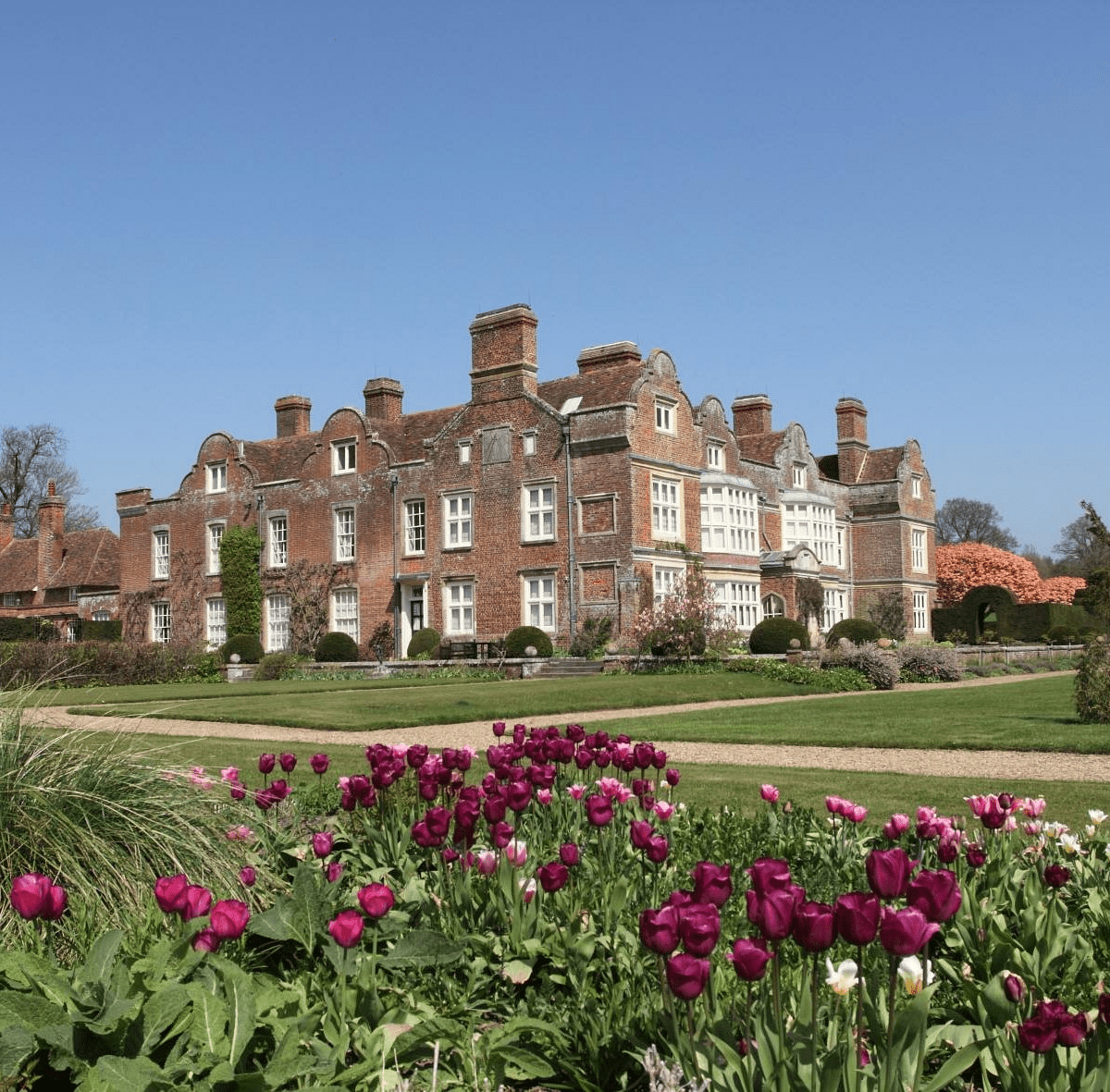
Sissinghurst Castle Garden, Kent
Sissinghurst Castle Garden, Kent
A Saxon pig farm became an Elizabethan mansion, then a prison for three thousand French sailors, then a ruin full of sardine tins and rusty bedsteads — and then Vita Sackville-West arrived and saw, quite clearly, what it could be. One of the most beautiful gardens in the world came from that particular act of imagination, and it has been stopping people in their tracks ever since.
There is a sentence Vita Sackville-West wrote about the day she first saw Sissinghurst that has stayed with me since I first encountered it. She described it as love at first sight. The place was, by any objective measure, a wreck: the Elizabethan buildings crumbling, the grounds strewn with old sardine tins, cabbage stalks and rusty bedsteads, the whole estate having passed through the hands of Wealden farmers, French prisoners of war, parish poorhouses and various states of gentle neglect since the Elizabethan era. None of this mattered to Vita. She saw its great potential. Her husband Harold Nicolson’s diary entry for 4 April 1930 is more measured: “Vita telephones to say she has seen the ideal house — a place in Kent, near Cranbrook, a sixteenth-century castle.” He went to look, and he agreed. They bought it, and the rest, as someone will always say at moments like this, is history. In this case the history is also one of the most beautiful gardens in the world.
A Place With Several Lives
Sissinghurst’s story did not begin in 1930. It is worth knowing before you arrive, because the layers of it add a depth to the visit that a purely horticultural appreciation leaves out.
The site has been inhabited, in one form or another, since the Saxon period: its name derives from Saxenhurst, meaning woodland, and the manor is documented as early as 1235. The Elizabethan mansion was built by the Baker family in the sixteenth century, grand enough to have received Queen Elizabeth I on a three-day visit in 1573, a state occasion costly enough that the Bakers, by some accounts, never quite financially recovered from the honour of it. The Civil War, successive inheritances and the general misfortune that seems to attach itself to grand houses across centuries brought the estate low, and by the eighteenth century Sissinghurst had found an unexpected new purpose: the housing of French prisoners of war.
During the Seven Years War, between 1756 and 1763, up to three thousand French sailors were held here in conditions that contemporary accounts describe as genuinely grim — overcrowded, underfed, inadequately aired, the Elizabethan buildings repurposed as cells. The prisoners, with the particular French gift for making something distinguished out of adverse circumstances, called their prison the Château de Sissinghurst, and the name attached itself to the estate so firmly that it stuck. They also left their mark more literally: graffiti of sailing ships, names and dates scratched into the stonework of the tower is still visible today.
By the time the nineteenth century ended the main house had burned, been demolished or fallen in on itself to the point where only the tower and a handful of outbuildings survived, and it was this — a ruin with extraordinary bones and a romantic mess of grounds — that Vita and Harold walked into in 1930. It is one of the more satisfying redemption stories in garden history.

The People Who Made It
To understand Sissinghurst as a garden, it helps to understand the partnership that created it, because the garden is almost a direct expression of who they each were, and of the particular marriage they had managed to construct together.
Vita Sackville-West was born in 1892 at Knole, the great Elizabethan house in Sevenoaks that had been her family’s home for generations. She adored it with a completeness that never dimmed, and the fact that she could not inherit it — the estate passing to a male cousin under the rules of agnatic primogeniture that she found both absurd and personally devastating — gave Sissinghurst a meaning for her that went well beyond garden design. It was her Knole, her own great house in Kent, the one no inheritance law could take from her. She wrote of wanting to live alone in a tower with her books, and she achieved it: the tower at Sissinghurst became her writing room and private retreat, a space so personal that she admitted only her dogs.
Harold Nicolson was a diplomat, a diarist of distinction, a political figure of some note and a man with a deeply ordered mind and a passion for formal structure. Their marriage was unconventional — both had significant relationships outside it — but the garden was, as more than one observer has noted, their third creation, the thing they made together that lasted beyond either of them. His contribution was the architecture: the bones and axes of the garden, the formal structure of its separate rooms and connecting vistas, what he described with considerable precision as “a succession of intimacies.” Vita’s contribution was everything else: the planting, the colour, the exuberant, romantic, occasionally riotous filling-in of Harold’s disciplined framework with plants she loved and understood.
The result of the two working together is what makes Sissinghurst unlike almost any other garden: the tension between rigour and abandon, between the perfectly maintained yew hedge and the climbing rose that appears to have chosen its own position, between architectural restraint and botanical generosity. It is a garden of collaboration, and it shows.
Their circle was extraordinary by any measure. Virginia and Leonard Woolf were close friends — the Hogarth Press printing machine, on which the Woolfs printed some of the earliest books published by their press, was given to Vita and Harold as a housewarming gift in 1930, and it sits today in the Oast Exhibition Space, a small and rather remarkable object to encounter among the garden tools and seasonal displays. Vita wrote a gardening column for The Observer from 1946 until a few years before her death in 1962, never once mentioning Sissinghurst by name but describing it in thinly veiled terms across hundreds of columns that brought its development into the imagination of an entire generation of British gardeners.

The Garden Rooms
Sissinghurst is not one garden. It is ten, each one a self-contained world with its own palette, mood and moment in the year, connected by openings in ancient brick walls, by gateways, by the long sight lines Harold designed to give the separate rooms a sense of reaching beyond themselves.
The White Garden is the most famous of them, and it has been since Vita created it in the late 1940s, filling a walled enclosure around the Priest House almost entirely with white-flowering and silver-leaved plants. The design was partly practical — the garden faces the Priest House where Vita and Harold dined, and Vita wanted something beautiful to see from those windows in the evenings — and partly a statement of aesthetic conviction that has proved extraordinarily influential. It is, by the assessment of garden historians, the most copied garden design in the world, the template for every white-and-silver border that has appeared in a private garden or Chelsea show garden in the seventy-odd years since. In high summer the Rosa mulliganii at its centre cascades with white flowers, the whole enclosure humming faintly with bees. It is, if you see it at the right moment, a genuinely transcendent piece of horticulture.
The Rose Garden is the summer heart of the place: old garden roses, climbing roses, shrub roses and their herbaceous companions in a space that reaches its peak in June and continues into July, the scent of it impossible to overstate. Vita had an internationally respected knowledge of old roses, deepened by friendship with the plantsman Edward Bunyard, and the collection at Sissinghurst reflects that knowledge in depth rather than breadth, favouring old varieties of genuine character over modern hybrids bred for quantity.
The Lime Walk is the spring piece, Harold’s creation specifically: parallel rows of pleached limes underplanted with thousands of bulbs — polyanthus, fritillaries, anemones, tulips — that flower in succession from late winter through April in colours ranging from deep purple to pale lemon. It is one of the finest spring sights in Kent, and the fact that most people associate Sissinghurst with the summer roses means the Lime Walk in April is considerably more peaceable than it deserves to be.
The Cottage Garden burns with warm colour, oranges and reds and yellows, a deliberate counterpoint to the White Garden’s restraint. The Herb Garden is formal and fragrant, the purple border a study in deep purples and blues, the Nuttery a cathedral of hazel poles underplanted with polyanthus. And the Delos Garden — Vita and Harold’s original attempt at a Greek-inspired dry garden, which the English rain defeated in the 1930s — was finally realised in 2021 by the landscape architect Dan Pearson working with the National Trust, figs and cypresses and drought-tolerant Mediterranean planting among rocks and gravel, the dream deferred eighty years and then fulfilled.
The Tower and the Estate Beyond
Climbing the seventy-eight steps of the Elizabethan tower is, for most visitors, the single most revealing act of the day. Vita’s writing room occupies the second floor, preserved as she left it: her books, her papers, the view over the garden she planted and the Wealden countryside she loved. From the top, the whole design of the garden is revealed at once, the series of rooms laid out below you like a map of the collaboration that created them, with Harold’s geometry and Vita’s planting visible simultaneously for the first time.
The estate beyond the garden walls is worth more time than most visitors give it: 460 acres of beautiful Wealden countryside with working farmland, shaded lakes and tranquil woodland crossed by waymarked estate walks that continue to function on days when the garden is at its most crowded. A lake walk, a farm trail, a circuit of the wider estate — any of these adds depth to what might otherwise be a purely horticultural visit and gives the younger or more restless members of a party something to do while the serious gardeners take their time with the rose collection.
Eating, Shopping and the Practical Details
The Granary restaurant looks out across the vegetable garden, the produce of which feeds directly into the kitchen: the head chef works with the team of vegetable gardeners to create dishes inspired by Sissinghurst which highlight the season’s best produce. It is a proper lunch rather than a glorified café, with a children’s menu that changes with the seasons and a view that earns its place as part of the experience. The Old Dairy Coffee Shop is the lighter option, good for a quick break with a book from the second-hand bookshop alongside. The plant shop sells Sissinghurst-propagated varieties: the one genuinely useful souvenir from a garden visit is a plant from the garden itself.
A carrying capacity system was introduced from March 2026 throughout the busy season until September 2026, which is worth knowing before you plan. This is not a queue or a timed-entry ticket for a specific slot but a capacity limit that means the garden fills and closes to new arrivals on the busiest days; arriving early or later in the afternoon is the practical wisdom, and late afternoons are generally quieter for those with the flexibility to choose. National Trust members visit free; non-members should check the current ticket prices on the NT website before travelling, as these vary by season.
Sissinghurst is two miles north-east of Cranbrook on the Biddenden Road, off the A262. The nearest railway station is Staplehurst, from which a bus service and a mile-and-a-quarter walk through the countryside will deliver you, muddy boots permitting, to the main drive. By road from London the journey takes around an hour and a quarter depending on the route and the day.
There is no bad season to visit, though each has its character. Spring brings the Lime Walk and the Nuttery at their most vivid; early summer brings the roses and the White Garden at their peak; autumn gives the hedges and topiary their clearest architectural form, stripped of the season’s exuberance; and winter shows you what Harold built, the bones of the thing, before Vita’s planting clothes them again. A refuge dedicated to beauty, as the National Trust puts it with unusual accuracy. It is exactly that, in any month you choose to visit it.
Sissinghurst Castle Garden Biddenden Road, near Cranbrook, Kent TN17 2AB
nationaltrust.org.uk/sissinghurst
01580 710700
Open daily year-round except 24 and 25 December. Carrying capacity in operation March–September 2026;
check the website before visiting for current availability. National Trust members free.
Dogs welcome on the wider estate; assistance dogs only inside the garden and buildings.
About the Author: Lara S

The Finer Map



Get our latest Delivered
Beautiful recipes, inspiration, guides and news that makes you want to live!