City Feature – Canterbury, Kent
Canterbury, Beyond the Cathedral
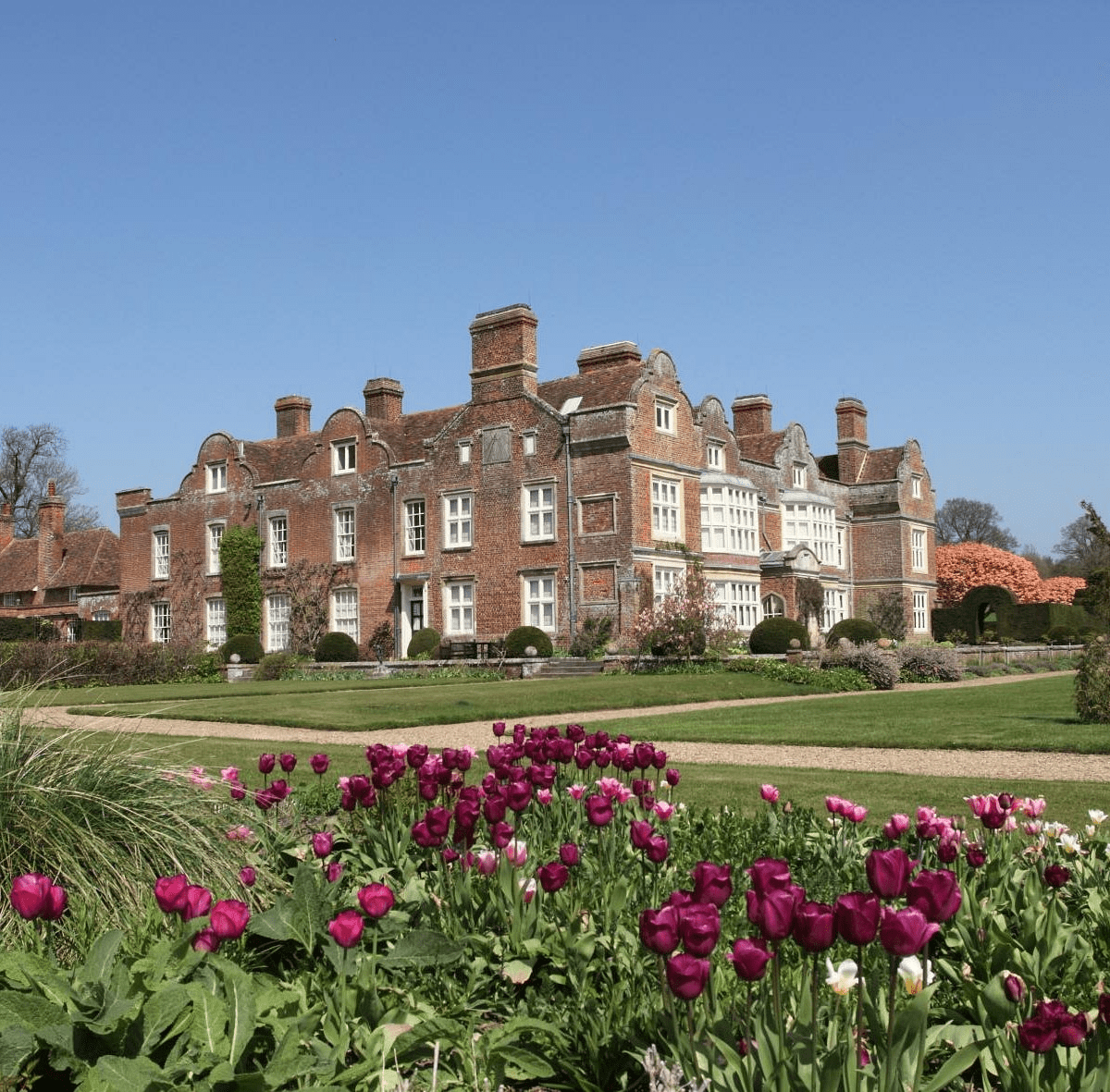
Canterbury does not need much help being noticed. Its cathedral has done the heavy lifting for nearly a thousand years. But the better day is the one that gives the great church its due, then wanders out into the older streets, the river, the independent shops, the market food hall and, if the weather behaves, the sea beyond.
Canterbury is one of those English cities everyone thinks they already know. A cathedral, a school trip, a fudge shop, a queue of visitors looking faintly medieval by lunchtime. It is a city so heavily associated with one monument that the rest of it can feel like supporting cast, waiting patiently in the wings while Bell Harry tower takes another bow.
This is understandable, but a pity. The cathedral is extraordinary, and we shall come to it properly, because one does not breeze past Canterbury Cathedral in a lifestyle feature like a woman too busy for history. But the city around it is richer than the usual hurried visit allows. It was a Roman town before it was a holy city; a walled place on the road between London and Dover; the landing point of Augustine’s mission; the scene of Becket’s murder; the destination of Chaucer’s pilgrims; the birthplace of Christopher Marlowe; and, rather more usefully for the modern visitor, a compact city where you can drift from stained glass to river water to a market lunch without once needing to perform heroics with a car park.
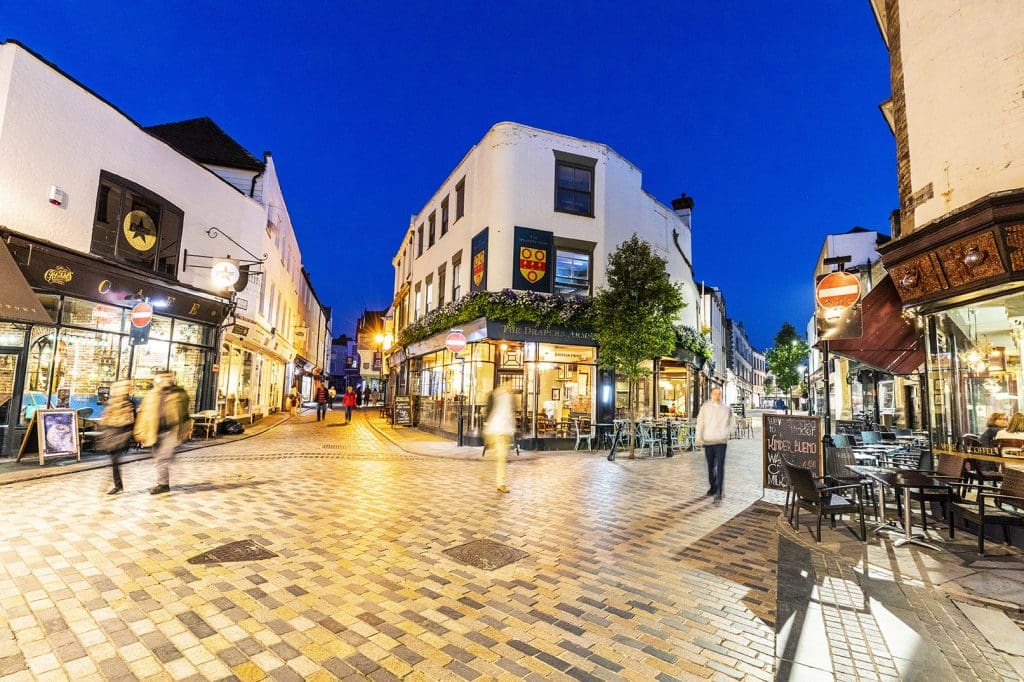
The trick with Canterbury is not to treat it as a cathedral with a high street attached. The central shopping stretch can be chain-heavy and a little tired in places, as many English city centres now are, and no amount of good stonework can entirely disguise the fact that some shopfronts would benefit from a stern word and a better sign writer. The pleasure is elsewhere: in the old quarters, the unexpected courtyards, the crooked streets, the independent corners, the river, the food hall beside Canterbury West, and the very sensible idea of pairing the city with Whitstable.

A city that has always drawn travellers
Canterbury has been receiving visitors for longer than most cities have been deciding what to do with them. The Romans knew it as Durovernum Cantiacorum, a town on the River Stour and on Watling Street, the great road running between London and Dover. The bones of that old town are still there if you know where to look: the line of the walls, the Roman Museum under the modern street, the sense that Canterbury has always been a place of passage as much as arrival.
Its English name comes from the stronghold of the Kentish people, and that suits it. Canterbury has never simply been pretty. It has been strategic, religious, scholarly, theatrical, argumentative and occasionally blood-soaked, which is more useful in a city than perfect manners. Augustine arrived in 597, sent from Rome by Pope Gregory the Great, and the conversion of the Kingdom of Kent set Canterbury on its long course as the spiritual centre of English Christianity.
Then came Thomas Becket. On 29 December 1170, four knights of Henry II murdered the archbishop inside the cathedral, turning a bitter church-and-state conflict into one of the most famous martyrdoms in Europe. Becket was canonised, pilgrims came in their thousands, and Canterbury became a city people travelled towards with money, prayers, hope, guilt and probably uncomfortable shoes. Chaucer understood the theatre of that better than anyone. The Canterbury Tales made the journey immortal, not by making pilgrims saintly, but by making them human.
That is still the best way to approach the city: not as a museum case, but as a place of layers. Holy ground, market town, student city, literary city, shopping city, day-trip city. Some layers are more elegant than others, but that is rather the point.
The cathedral, properly
The cathedral is the reason most people come, and for once the obvious thing is not overrated. Canterbury Cathedral is one of the great buildings of England, a UNESCO World Heritage Site with St Augustine’s Abbey and St Martin’s Church, and the Mother Church of the Anglican Communion. It is vast, but not merely in size. It feels accumulated. Norman, Gothic, Perpendicular, political, devotional, theatrical, wounded and repaired. A building that has held so much English history it seems faintly tired of being introduced.
Inside, the Martyrdom in the north-west transept marks the place where Becket was killed. It is not the grandest part of the cathedral, which makes it more powerful. The story narrows there: four knights, one archbishop, a stone floor, the violent collapse of a quarrel that had grown too large for language.
The site of Becket’s shrine in Trinity Chapel is marked now by a single candle. That is one of the great small gestures in the city. The shrine itself, once blazing with gold and jewels and pilgrimage offerings, was destroyed under Henry VIII in 1538, and the candle does more work than a reconstruction ever could. It leaves the absence visible.
Elsewhere, there is the crypt, among the most atmospheric Norman spaces in the country; the medieval glass; the cloisters; the heraldic shields; the quire rebuilt after the fire of 1174; and Bell Harry tower rising above the city with the confidence of a building that knows it has dominated the skyline for centuries. Give it time. The cathedral is not something to tick off between coffee and shopping unless absolutely forced by poor planning or small children.
The old city beyond the gates
Once the cathedral has had its proper share of the day, walk out. Canterbury rewards the second hour better than the first.
St Augustine’s Abbey sits just outside the old city walls, partly ruined and often missed, which seems unfair given that it was founded at the very beginning of Augustine’s mission and became the burial place of early archbishops and Kentish kings. There is something moving about its brokenness. The cathedral still commands; the abbey asks for imagination.
St Martin’s Church is quieter still, and older in feeling than almost anything else in the city. It is widely recognised as the oldest church in continuous use in England, with Roman fabric still in its walls and the story of Queen Bertha and Augustine folded into its beginnings. It has none of the cathedral’s scale, but it has the sort of ancient simplicity that makes you lower your voice without being told.
Back in the centre, the Westgate is the great survivor. Built in the late fourteenth century, it is the only remaining medieval city gate and widely described as the largest surviving one in England. You can climb it for views across the city, which is worth doing partly because Canterbury’s roofline still tells its story better from above than the high street does from below.
The walls are best followed in fragments, with Dane John Gardens giving a good sense of the old defences and a little green relief. Eastbridge Hospital, near the river, once received poor pilgrims and still feels like a pause in the middle of the city. Greyfriars Chapel sits on the water with a modesty that rather becomes it. The Beaney House of Art & Knowledge, on the High Street, is part museum, part gallery, part library and part visitor information centre, which sounds like too many jobs until you remember that civic buildings used to be expected to earn their keep.
Palace Street is worth a slower look. The crooked Sir John Boys House leans into the street like a building that has heard excellent gossip and is not above repeating it. Nearby are the old school and the plaques, the shopfronts and the turns of the lane that remind you Canterbury is at its best when it stops behaving like a shopping centre and remembers it is a medieval city with a student population and very good bones.
On the water, and out of the gates
A river changes a city’s pace, and Canterbury is no exception. The Great Stour slips through the old centre in a way that feels almost designed to rescue visitors from pavement fatigue. From Westgate Gardens you can take a chauffeured punt, drifting under bridges and past gardens, medieval fragments and the backs of buildings that look more interesting from the water than they do when you are trying to find lunch.
The gardens themselves are an easy pleasure: willow, river, grass, flowers in season, and enough space to sit for a while and let the city loosen its grip. Canterbury can be busy, particularly around the cathedral precincts, and the river is one of the better ways to remember that not every historic city needs to be consumed at museum pace.
Then there is Whitstable. Seven miles north, it is close enough to make Canterbury feel almost inland by accident. You can drive, take the bus or, more romantically, follow the Crab and Winkle Way, which traces the route of the old Canterbury to Whitstable railway. Whitstable gives the day a different ending: oysters, harbour air, weatherboard, gulls, galleries and a glass of something cold if the sun has done its duty. It is not necessary, but it is a very good idea.
There are other outings too. Chilham, small and film-set pretty, lies to the south-west. The Pig at Bridge Place sits a few miles out of the city for those who prefer their lunch with country-house surroundings and a 25-mile menu. But Whitstable is the natural pairing: Canterbury for stone and story, Whitstable for salt and light.
Shopping, if you know where to look
Canterbury’s shopping is best approached with a little editing. Whitefriars gives the city its modern retail centre, and Fenwick is its grand anchor: a large, well-organised department store on St George’s Street, spread across four floors with fashion, beauty, homeware and enough proper brands to make it useful rather than merely large. It is the sort of store that does the civilised department-store thing well, which still matters in a city where the weather can turn and plans occasionally need a roof.
But the more enjoyable shopping is in the independent quarters. The King’s Mile, running around Palace Street, Sun Street, Burgate and Northgate, has the better wander: gifts, books, cafés, small restaurants, jewellers, galleries, oddities, and shops that feel as though someone actually chose what went inside them. Siesta is a good example, a long-standing fair-trade shop selling clothing, crafts, jewellery, musical instruments and gifts from around the world. It gives the city a different texture: colourful, ethical, slightly bohemian, and a useful antidote to the more predictable parts of the centre.
Burgate and the Cathedral Quarter are also good for slower browsing, especially if you enjoy the gentle sport of charity and vintage shopping. Pilgrims Hospices has a Vintage and Retro shop on Burgate, close to the cathedral gates, and Demelza’s Canterbury shop has fashion, accessories, homeware, menswear, media, music and books across its floors. These are not polished luxury experiences, and nor should they be. They are treasure-hunting experiences, which require patience, good timing and the willingness to leave with something you had no business needing until you saw it.
This is the better Canterbury shop: not the high street by default, but the side streets, the pre-loved rails, the fair-trade shelves, the bookish corners and the food hall at the station.

A table worth travelling for
The Goods Shed is the food reason to come to Canterbury, and it sits in exactly the right place: beside Canterbury West station, in an old railway goods shed that now holds a farmers’ market, food hall and restaurant. It opened in 2002 and still feels unusually well-conceived, as though someone looked at a tired railway building and thought, correctly, that what it needed was bread, fish, vegetables, cheese, wine and a restaurant raised above the market floor.
The market is the point. There is a veg stall, butchery, bakery, independent fishmonger, cheese, charcuterie, pasta, wine, beer and the kind of produce that makes dinner feel possible before you have even sat down. The restaurant uses what the market gives it, with a compact seasonal menu that changes twice a day. Lunch is the easier, brighter visit; supper becomes more candlelit as the market winds down, which is exactly as it should be.
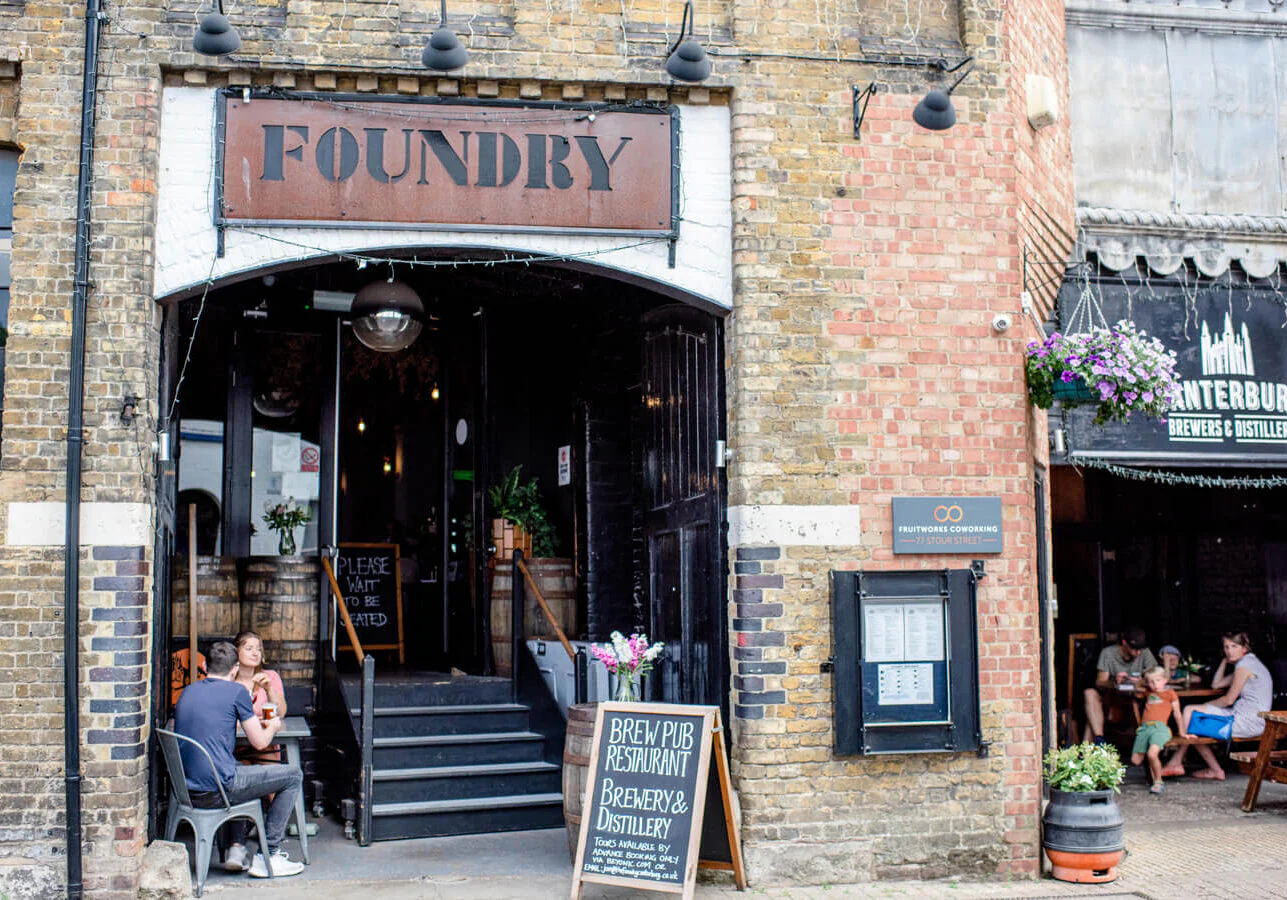
It is not the only place to eat in Canterbury. The Micro Roastery on St Margaret’s Street is a good stop for serious coffee. The Refectory Kitchen is popular for brunch. Café St Pierre brings a little Parisian mood to the lower end of the High Street. The Foundry makes its own beer and spirits. Corkk does Kent wine with conviction. Paxton & Whitfield remains a lovely name to see in a city that knows a thing or two about tradition.
Still, if the day has one table, make it The Goods Shed. There are cities with bigger food scenes and louder ones. Canterbury’s central food offer can feel patchy, and Whitstable and Margate have more obvious culinary energy at the moment. But The Goods Shed is the sort of place that gives a city credibility. Book ahead, especially if you want the restaurant rather than a quick market graze.

Pork belly, beautifully cooked and well presented by the Goods Shed in Canterbury – https://thegoodsshed.co.uk/


How to use it
Canterbury is one of the easier historic cities to do without a car. High-speed trains from London St Pancras reach Canterbury West in roughly an hour, and Canterbury West is also the station you want if The Goods Shed is part of the plan. Canterbury East is convenient for the south side of the city, but for most visitors arriving from London, West has the better opening move.
The city is compact and walkable, though the old streets can be uneven and busy. Give the cathedral proper time, then choose two or three smaller things rather than trying to collect the city like stamps. St Augustine’s Abbey and St Martin’s work well together. Westgate, the walls and the gardens make an easy west-side circuit. The river punt is best in fair weather, obviously, though the British relationship with fair weather remains more hope than system.
Spring to early autumn is the kindest season for the river, gardens and a Whitstable pairing. Winter still suits the cathedral, museums, shops and food hall, but check opening times more carefully. Cathedral tickets, abbey hours, river tours, restaurant days and small shop opening times all deserve a quick look before you travel, because charm is much easier to enjoy when you have not arrived twelve minutes after closing.
So yes, come for the cathedral. It has earned that much. But do not leave too quickly. Canterbury is not only a holy city with a good tower and a gift shop economy. It is a city of walls and water, abbey ruins and crooked houses, serious food and odd little shops, pilgrims and students, river gardens and train lines to the sea. The best day here is not the one that rushes straight to the famous thing. It is the one that lets the famous thing open the door, then follows the city through it.
About the Author: Lara S

The Finer Map



Get our latest Delivered
Beautiful recipes, inspiration, guides and news that makes you want to live!