Ightham Mote, Kent
Ightham Mote, Kent
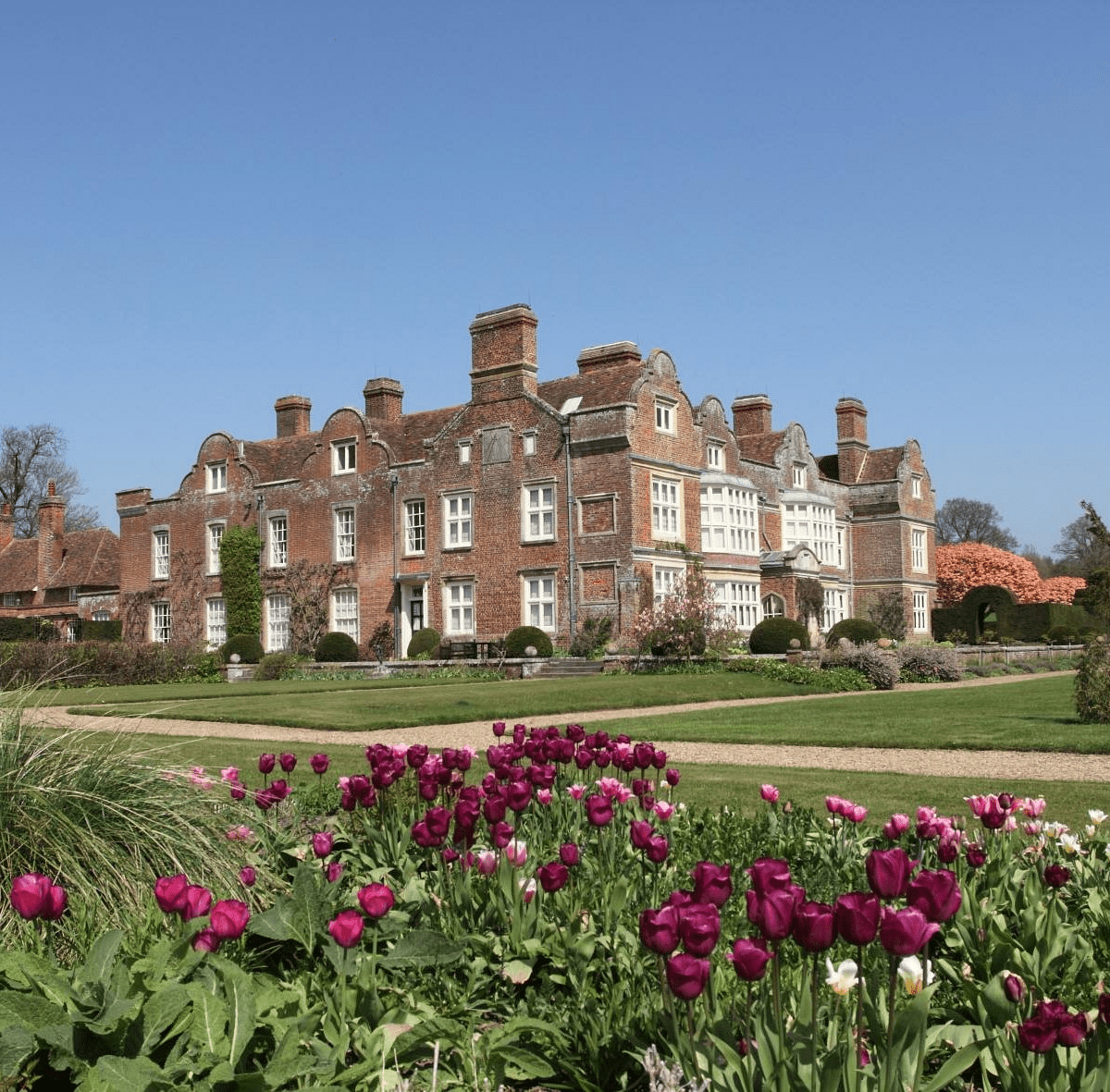
A moated medieval manor in a hidden Kentish valley, pronounced “item,” looking inward rather than outward, and containing, among other things, the only Grade I listed dog kennel in the United Kingdom. It has been home to a man who tried to throw his wife into a well, a Tudor courtier who died in a debtors’ prison, Henry James sleeping in a haunted tower bedroom, and an American who spotted it for sale in a copy of Country Life and bought it. Nikolaus Pevsner called it the most complete small medieval manor house in the county. He was not wrong.
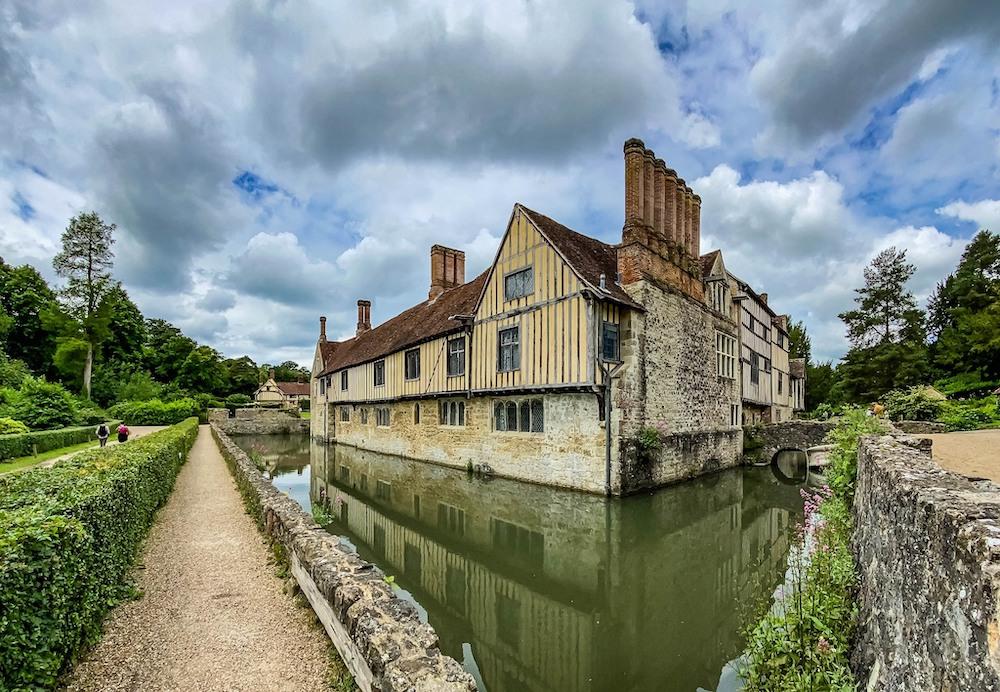
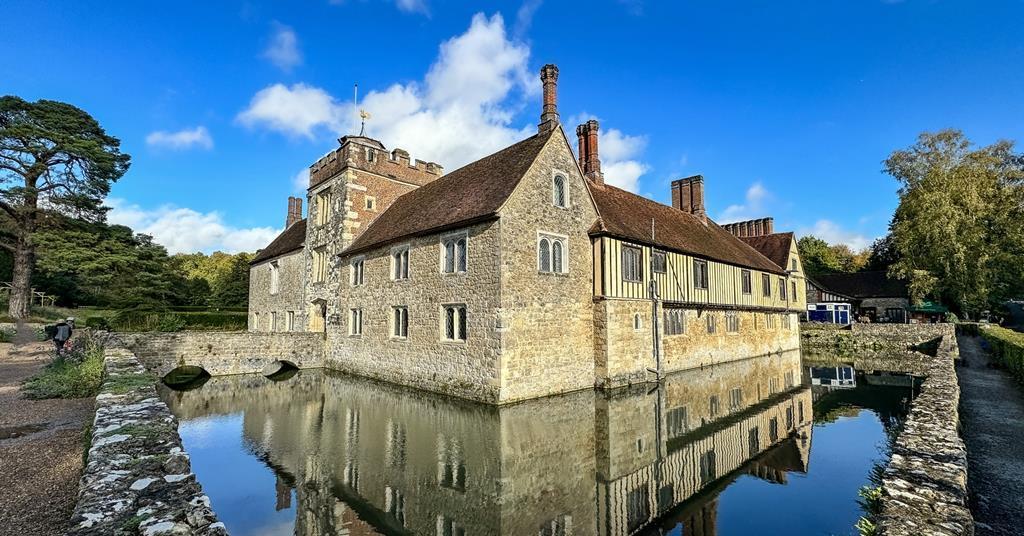
Most of the houses on this Kent shelf announce themselves from a distance. Knole rises through parkland. Leeds Castle floats on its lake. Hever’s towers are visible before you have finished parking. Ightham Mote does none of this. It sits in a wooded valley south of Sevenoaks in a hollow of the Kent Downs, hidden from all but the closest approach by the trees and the lie of the land, and the first proper view of it comes only when you cross the moat on a narrow footbridge and find yourself inside the courtyard it has been enclosing for the better part of seven hundred years.
This is not accidental. Most courtyard houses of the medieval period had at least one wing demolished at some point in their history, opening up to the landscape and letting the outside world in. Ightham Mote wholly surrounds its courtyard and looks inward, into it, offering little information externally. The architecture faces itself rather than its surroundings, which gives the house a self-contained quality unlike anything else on this shelf: a world inside a world, reached across water, contained by water, more interested in what it is than in what it appears to be from the road. You enter it, rather than approaching it, which turns out to be rather the point.
The Name, and the First Question
Ightham is pronounced “item,” which is the kind of information that saves a first-time visitor a specific embarrassment in the car park. Its etymology is unsettled: it may derive from an early Saxon settler of the area named Ehta or Ohta, the village named for the man rather than any feature of the landscape. Mote is equally ambiguous. It could refer to the moat — four wings of medieval ragstone and timber surrounded on all sides by water lapping at the outer walls — or it could equally derive from “moot,” a gathering place, a meeting of the community in a space of some importance. Both are plausible, and both feel right, because Ightham Mote has been, over its seven centuries, both a house kept by its water and a place where history, in its peculiar way, kept gathering.
A Cast of Owners
The core of the house dates from around 1340, though a mill on the site predates even that, and the original builder is unknown — clearly someone of substantial wealth, since the earliest recorded owner, Sir Thomas Cawne, acquired it in the 1360s having fought in France with Edward the Black Prince. After Cawne’s death in 1374 the house passed to his eldest son Robert, who distinguished himself primarily by attempting to murder his wife by throwing her into a well. He was sent to the Tower of London, eventually pardoned by the king, and disappears from the historical record thereafter, which is perhaps the most quietly satisfying outcome available to the story.
The Haute family acquired the house through Alice Cawne in the 1380s, and it was under the Hautes that it took its current form. Richard Haute inherited in 1462 as cousin to Elizabeth Woodville, who married Edward IV in 1464, making him a significant figure both in Kent and at court. He extended the house considerably, adding the upper stages of the gate tower and the west and south wings, turning a modest medieval manor into a property of genuine distinction. His grandson Edward, however, reversed this trajectory with some thoroughness: inheriting at the age of eleven in 1487, he spent his adult life accumulating debts, mortgaging the house, selling properties and eventually finding himself in Ludgate debtors’ prison before fleeing to Ireland. It is a trajectory that feels both very medieval and somehow entirely contemporary.
Richard Clement, who acquired the house in the early sixteenth century, brought it back up the social register. Sheriff of Kent, gentleman of the household to both Henry VII and Henry VIII, he married a wealthy elderly widow with considerable foresight and used his position at court to good advantage. The connection to Henry VIII is visible in the house still: the pomegranate emblem of Catherine of Aragon, which appears on the ceiling of the chapel, dates from Clement’s ownership and the period of Henry’s first marriage — a decorative choice that, like so much that surrounds Henry’s first queen, was overtaken by events. The Selby family who followed added their own layer: Sir William Selby was one of the first officials to welcome James Stuart to England as its new king in 1603, and his wife Dorothy, one of Elizabeth I’s ladies-in-waiting and a woman celebrated for her needlework, is at the centre of one of the house’s more delicious legends. According to the story that attached itself to Ightham Mote in the wake of the Gunpowder Plot, Dorothy Selby wrote the Monteagle Letter — the anonymous note that warned a nobleman not to attend Parliament on 5 November 1605 and gave James I’s government the intelligence to foil Guy Fawkes’s conspiracy. The legend holds that Catholic sympathisers, in revenge, captured Dorothy and walled her up alive. When Victorian workmen later opened a blocked arch in the house, they discovered a skeleton of a woman sitting in a chair. Her ghost, known as the Grey Lady, is said to still walk the corridors, which gave Henry James a restless Christmas in the Tower Bedroom in December 1887 — he noted that she failed to materialise, though he found the room atmospheric enough regardless.
Henry James’s visit came during a remarkable three years in the late 1880s, when the American railway magnate William Jackson Palmer rented Ightham Mote and it became, improbably, a centre of the Aesthetic Movement. Visitors included John Singer Sargent, Henry James and Ellen Terry, the great actress of her age, who came to a moated medieval manor in a Kentish hollow and, by all accounts, found it entirely congenial.
Sir Thomas Colyer-Fergusson, who purchased the house in 1889 and carried out essential repairs that saved it from the worst of several centuries’ accumulated neglect, contributed the detail that most reliably stops visitors in the courtyard. A Victorian dog lover of conviction, he commissioned a dog kennel for Dido, his St Bernard, and had it built in stone at a scale and with a quality of craftsmanship that Historic England has since recognised with a Grade I listing. It is the only Grade I listed dog kennel in the United Kingdom. Dido’s kennel has legal protection that many perfectly good medieval buildings would envy, and the fact that it sits in the same courtyard as a fourteenth-century great hall without anyone finding this particularly incongruous says something worth noticing about the character of the house.
Sir Thomas’s family paid a different price. His son Riversdale was killed in 1917 at the Third Battle of Ypres, aged twenty-one, and was awarded a posthumous Victoria Cross. His eldest son Max died in a bombing raid in 1940. The high costs of upkeep and death duties that followed led Sir Thomas’s grandson James to sell the house in 1951, when it was acquired at auction for £5,500 by three local businessmen — a builder, a farmer and a chemist — who had no particular plan for what to do with a medieval manor but felt compelled to stop it being demolished, which seems as good a reason as any.
Charles Henry Robinson, who bought it from them in 1953, closes the list of owners with the story that is in some ways the most touching. An American from Portland, Maine, he had known the property from holidays in England during the 1920s and, many years later, happened to see the house for sale in Country Life. He bought it immediately, lived there for only fourteen weeks a year for tax reasons, made many urgent repairs, and announced in 1965 that he would give Ightham Mote and its contents to the National Trust. He died in 1985 and his ashes were immured just outside the crypt. A man who fell in love with a house on holiday, found it for sale in a magazine decades later, and arranged to stay in it for ever: it is, if you are looking for it, a story about what a place can do to someone who pays it proper attention.
The House Itself
The construction is of Kentish ragstone and dull red brick, the buildings of the courtyard having originally been built of timber and subsequently rebuilt in stone. The house has more than 70 rooms, all arranged around a central courtyard, “the confines circumscribed by the moat.” Inside, the house traces seven centuries of English domestic history in a single circuit, each room carrying the marks of the era that furnished it without any single period quite overwhelming the others.
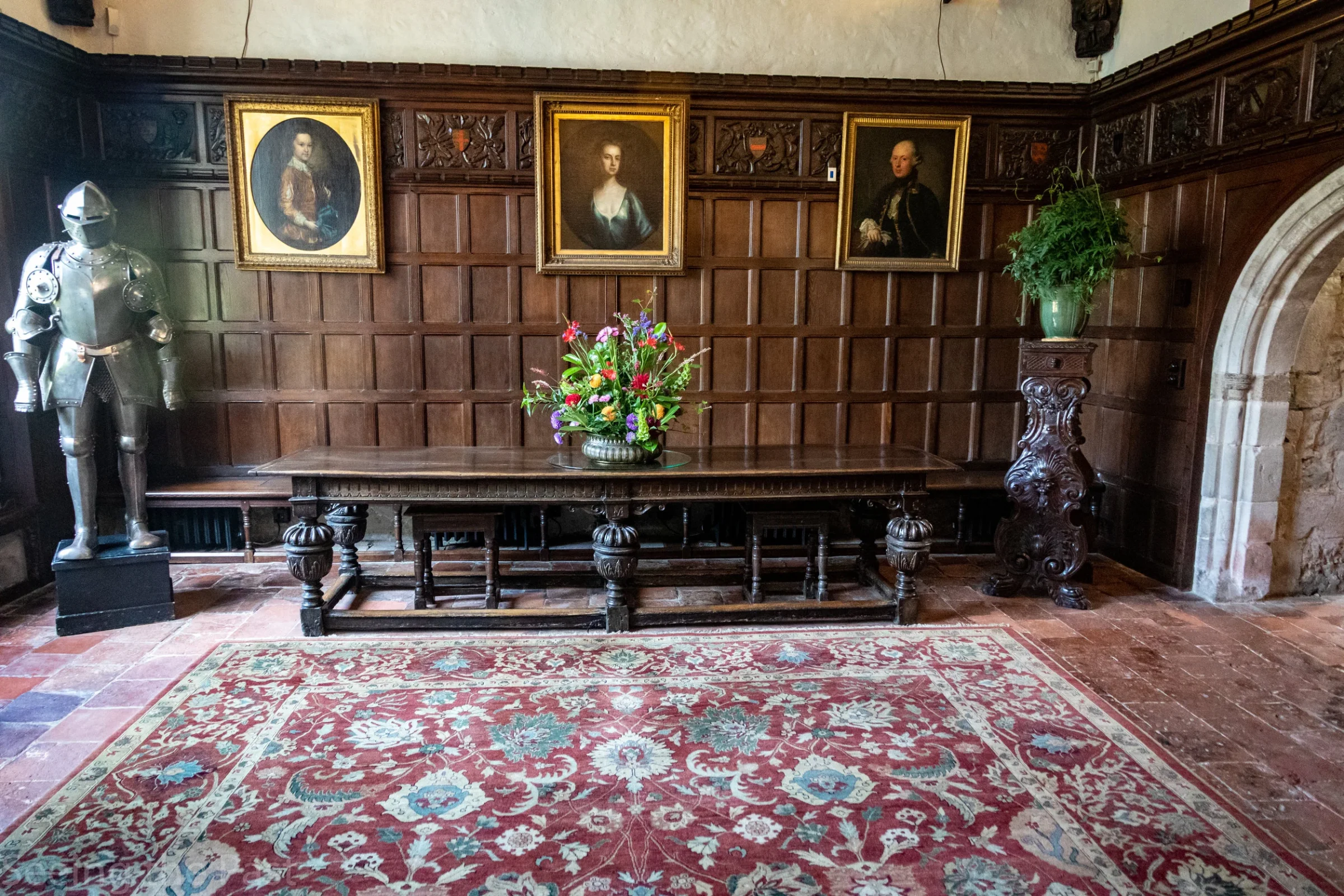
The Great Hall is the oldest and most commanding space, dating from around 1330: a high, timber-framed room with a great window added around 1480, its barge boards carved with leaves, vines and floral emblems including Tudor royal symbols. The Crypt beneath the chapel is the most atmospherically medieval space in the house, low-ceilinged and stone-vaulted, cool and dark and entirely convincing about what century it is. The New Chapel, built around 1480, has linen-fold panelling and a painted ceiling of particular beauty. The Oriel Room holds an 1845 painting of the house by Charles Landseer, brother of the sculptor Edwin; the Solar Bedroom has Sanderson wallpaper faithfully reproduced from a saved sample of the original, and a section of exposed wall that shows how a window was previously larger. A Jacobean staircase and chimney pieces were installed; Palladian and Gothic windows were inserted; and the walls were hung with hand-painted Chinese wallpaper from the 18th century or were covered with panelling in the “Old English” style, each alteration reflecting the taste and moment of whoever was living here when the mood to improve something struck.
The Victorian billiard room is the final room on the circuit and feels, in a house this old, surprisingly at ease: a reminder that for most of its history Ightham Mote was simply the house someone lived in, its medieval bones taken for granted by occupants who wanted a comfortable billiard room as much as they wanted an atmosphere of centuries.
The Conservation Work, and the Deathwatch Beetle
In 1989, the National Trust began what became one of the largest and most technically complex conservation projects ever undertaken on a medieval building in England. The project involved dismantling much of the building and recording its construction methods before rebuilding it. During this process, the effects of centuries of ageing, weathering, and the destructive effect of the deathwatch beetle were highlighted. The deathwatch beetle — a small wood-boring insect that has been working on English timber-frame buildings since the medieval period — had done considerable damage to the structural timbers, and treating it required the kind of patience and precision that the beetle itself would probably admire. The project ran for fifteen years and cost over ten million pounds. The building that came through it is arguably in better structural condition than it has been for several centuries, which makes the visit now a particularly good time to encounter it.
The Gardens & The Estate
The fourteen-acre garden surrounds the house on all sides of the moat, its streams and lakes fed by natural springs that also supply the moat, the water in constant gentle movement across the whole site. A narrow stream runs through the grounds, tumbling down two cascades on its way, and four small fountain pools add to the atmosphere of a garden that manages to feel both maintained and genuinely natural at the same time. An orchard, a cutting garden, flower borders and a walled garden give the planted areas structure and seasonal interest; the orchard in blossom in April is one of the loveliest sights on the estate.
Beyond the garden, more than five hundred acres of Kent Downs National Landscape stretch out in all directions, with a variety of marked walking trails through ancient woodland and across the Greensand Ridge. One trail connects Ightham Mote to Knole Park along the Greensand Way — a walk of several miles through ancient woodland that links two of the finest medieval estates in the county, both National Trust, both free to enter on the park side, both worth a day on their own and a full weekend together. If you have read this collection in order, you will already know both ends of that walk rather well.
The Practical Details
Ightham Mote is on Mote Road, Ivy Hatch, six miles east of Sevenoaks off the A227. By car it is straightforward from Junction 5 of the M25, approximately forty minutes from central London. The nearest railway station is Borough Green and Wrotham, around two miles away, from which the walk to the house along the Greensand Way is entirely pleasant if you have the boots for it. National Trust members visit free; non-members should check current ticket prices on the website before travelling.
The house is open on a timed circuit; the gardens and estate walks are open at wider hours. The Mote Café serves hot food and seasonal lunch; a second-hand bookshop at the visitor entrance repays the few minutes it asks of you; a plant shop and small gift shop complete the facilities. The estate walk to Knole is waymarked and can be downloaded from the National Trust website, and is among the finest half-day walks in the county.
Allow two to three hours for the house and immediate gardens. Allow the rest of the day, if you have it, for the estate. The house is quiet and intimate and asks to be taken at its own pace, which is slower than you arrived at and considerably slower than you will be by the time you have found Dido’s kennel, stood in the Great Hall and tried to remember where the Grey Lady is supposed to appear.
Ightham Mote Mote Road, Ivy Hatch, Sevenoaks, Kent TN15 0NT
nationaltrust.org.uk/ightham-mote
01732 810378
Open year-round (check website for seasonal house opening times). Gardens and estate open at wider hours. National Trust members free.
About the Author: Lara S

The Finer Map



Get our latest Delivered
Beautiful recipes, inspiration, guides and news that makes you want to live!