Penshurst Place and Gardens
Penshurst Place and Gardens, Kent
A fortified medieval manor built by a Lord Mayor of London in 1341, acquired by Henry VIII as a convenient base for courting Anne Boleyn a few miles up the road, given to the Sidney family in 1552 and never returned. It has been a private family home for nearly five hundred years, and it remains one today. This is not a National Trust property. It is not run by a committee or a foundation. It is a house that people still live in, and it shows, in the best possible way.
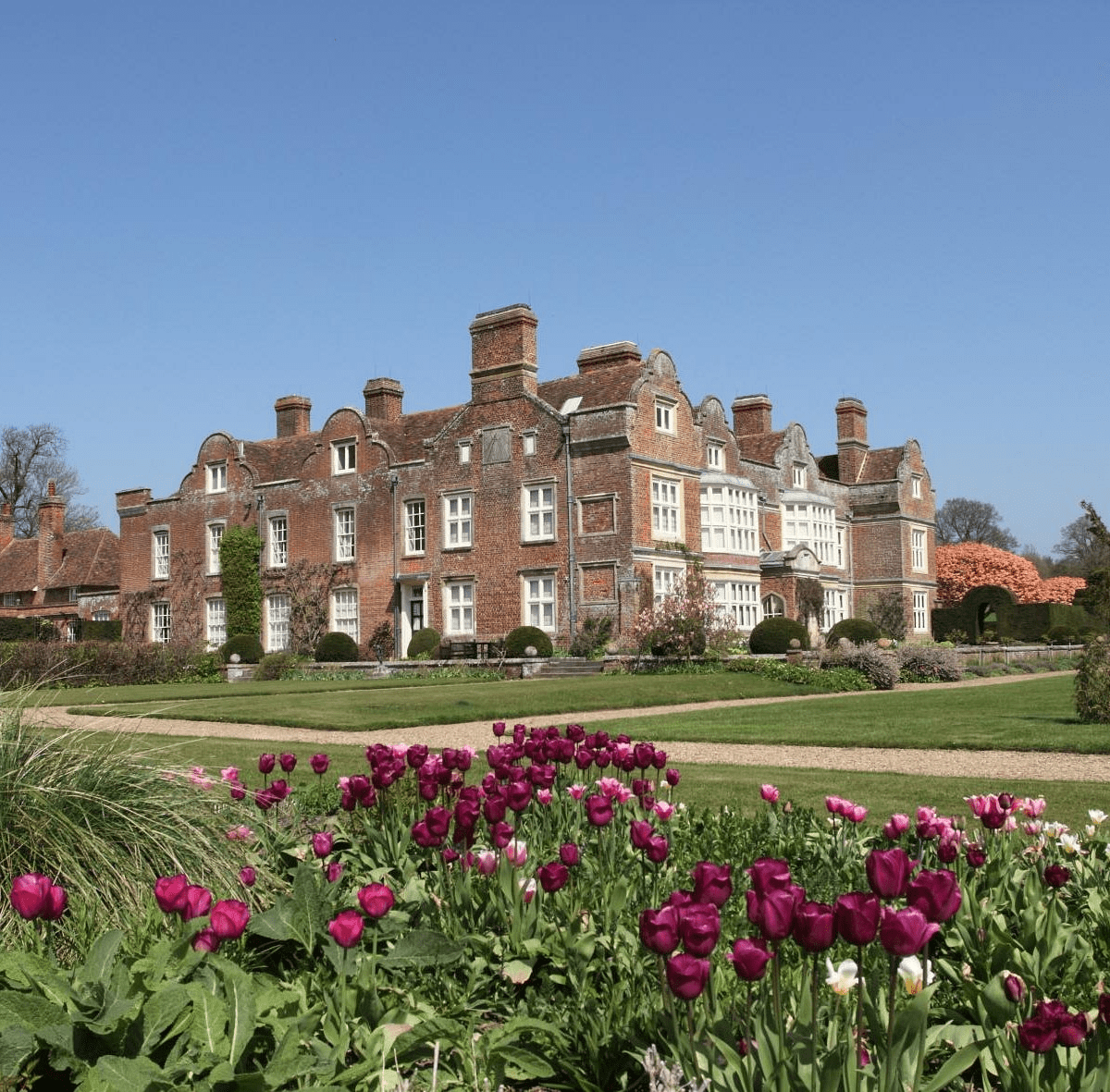
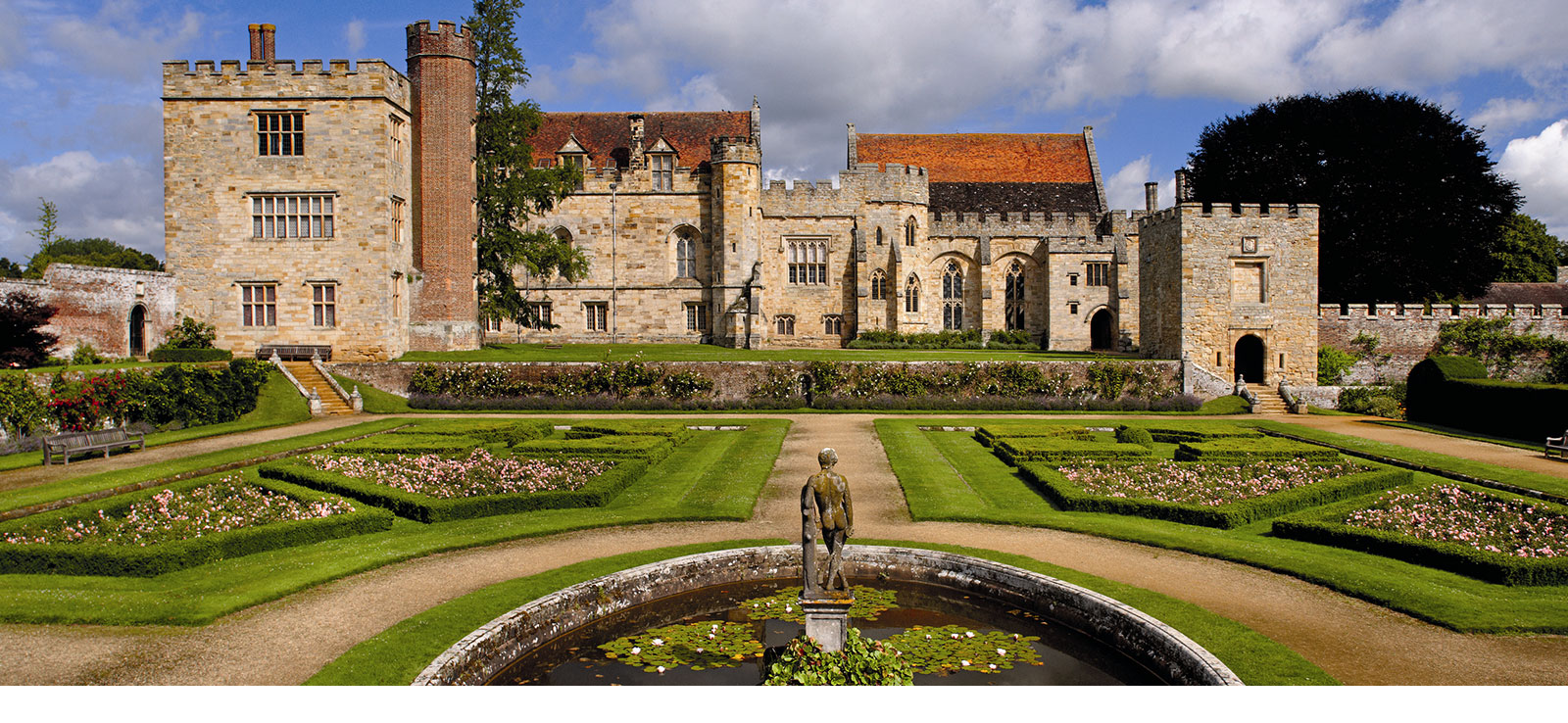
Penshurst Place is at its most persuasive before you have gone inside. The approach through the village — past the timber-framed houses of Leicester Square, named not for the London entertainment district but for Robert Dudley, Earl of Leicester and great favourite of Elizabeth I, who had connections with the estate — gives the house a setting of such composed English charm that it seems almost improper to disturb it by actually visiting. The gatehouse and the towers of the house rise above the village church of St John the Baptist, and the whole scene looks, from the right angle, much as it would have looked to a Tudor horseman arriving in reasonable expectation of a good dinner.
The impression intensifies inside. Where most great houses have been managed, curated and arranged into museums of themselves, Penshurst has the particular quality of a place that is simply lived in, its state rooms and medieval hall part of the same continuous domestic story rather than exhibits in a separate institutional one. The Sidney family — or rather the De L’Isle family, their descendants who took the Sidney name — have been here since 1552, and the house reflects nearly five centuries of a single family’s accumulation, taste and attachment rather than the careful neutrality of preservation. It is, in the best sense, slightly imperfect, and all the more convincing for it.
The Hall That Started It All
Penshurst Place was built in 1341 by Sir John de Pulteney, a London merchant who had been Lord Mayor of the City four times and wanted a country house within easy distance of the capital, at a moment when such things were becoming desirable for men of his class and means. What he built was, at its centre, one of the finest domestic halls in England, and it remains so.
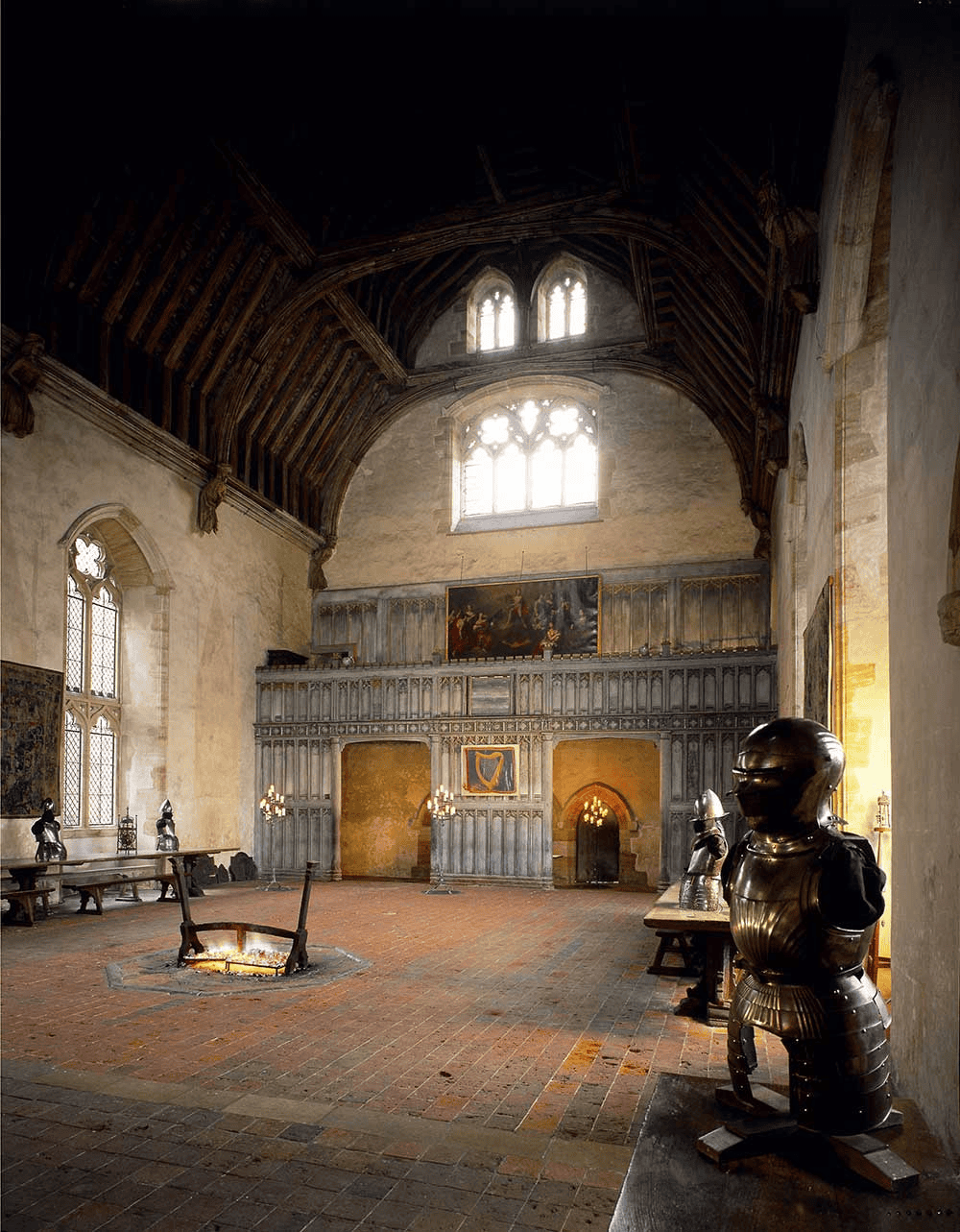
The Baron’s Hall — also called the Great Hall — is 62 feet long, 40 feet wide and 60 feet in height: a room of considerable physical authority that was designed to impress, to intimidate and to feed a very large number of people at once. The critic Simon Jenkins described it as “the mightiest hall owned by a commoner in England,” and the claim holds. The roof is chestnut timber, a rarer and more expensive choice than the oak used in most halls of the period, and the structure has survived nearly seven centuries with its proportions and its material integrity essentially intact. The octagonal central hearth — the original method of heating a space this large before chimneys became standard — occupies the middle of the stone floor, its smoke theoretically rising to a louvre in the roof above. Medieval banners hang from the walls. The colour that was always part of these spaces, which we habitually drain from them in imagination, is still present in the tapestries and the heraldry that line the walls above the trestles.
The hall is also, incidentally, the place where Inigo Montoya uttered the most quoted line in fantasy film. The Princess Bride, filmed at Penshurst in 1987, used the Baron’s Hall as the setting for several of its castle scenes, and the flagstones you walk across are the same ones that Andre the Giant walked across three decades ago. This is either a wonderful or an irrelevant detail depending on your relationship with the film, but it has made the hall recognisable to a generation of visitors who arrived knowing something about it before they understood why.
The Tudors and the Buckingham Feast
Before the Sidneys arrived, Penshurst passed through a sequence of distinguished and frequently unfortunate owners. The Dukes of Buckingham held it for several decades, and the 3rd Duke — Edward Stafford — hosted Henry VIII at Penshurst in 1519 with a feast of considerable extravagance, intended to demonstrate loyalty and impress the King. Two years later he was executed for treason. It is a trajectory that, at some point in a Tudor narrative, almost always leads to the block.
Henry confiscated the estate, appointed Thomas Boleyn as its Keeper — Thomas being the father of Anne Boleyn, who lived at Hever Castle a few miles across the Wealden hills — and used Penshurst in the years that followed as a convenient hunting lodge during the courtship that would, in due course, change the entire religious settlement of England. The connection between Hever and Penshurst is one of those Kent details that the map makes plainer than the history books: the two houses are close enough that a determined Tudor horseman could ride from one to the other in less than an hour, which is effectively what Henry did.
The Sidneys, and Philip
In 1552 the young Edward VI granted Penshurst to Sir William Sidney, his steward and chamberlain and a man of genuine political skill who had served Henry VIII and managed to remain in favour under a king of a very different character. Sir William died soon after the grant; the house passed to his son Sir Henry Sidney, who had the particular Tudor gift of surviving. He served under Edward as a Protestant, under Mary as a Catholic, and under Elizabeth as a Protestant again, navigating the three contradictory religious settlements of successive reigns with a diplomatic dexterity that his son Philip, who was far more principled and considerably less careful, did not inherit.
Sir Henry added the north and west frontages to the medieval hall and built the King’s Tower, adding new wings and rooms around the medieval core without fundamentally disturbing it. His wife, Lady Mary Dudley, contracted smallpox after nursing Elizabeth through a severe bout of the disease, and the disfigurement she suffered afterwards was such that she reportedly stopped appearing in public. The Queen, reportedly, never entirely acknowledged the debt.
It was Sir Henry’s son Philip who gave the family its enduring literary fame, and Penshurst its place in the English poetic tradition. Born here in 1554, Philip Sidney grew up in rooms that the house still shows and wrote poetry that was, for a generation, the most admired in England: the sonnet sequence Astrophil and Stella, addressed to Penelope Devereux, and Arcadia, the pastoral romance he wrote with his sister Mary and explicitly set in the countryside of his childhood around Penshurst. His portrait hangs in the Long Gallery. His funeral helm is in the Nether Gallery below it. He died in 1586 at the age of thirty-one, of gangrene contracted from a bullet wound to the thigh received during the siege of Zutphen in the Low Countries. His tomb in Old St Paul’s Cathedral was destroyed in the Great Fire of London eighty years later. The light of that star, as one of his contemporaries put it, burned only too briefly.
His sister Mary Sidney Herbert was, in her own right, one of the most significant literary figures of the Elizabethan age: a poet, translator and patron of remarkable sophistication whose circle at Wilton included Edmund Spenser and Christopher Marlowe. She is commemorated at Penshurst alongside her brother, and the house’s literary reputation rests, in important ways, on both of them equally.
Philip’s brother Robert built the Long Gallery that runs above the Nether Gallery, completing the final major addition to the house’s structure and creating the room in which generations of Sidneys have hung the family portrait collection that now lines its walls.

The Rooms
The state rooms at Penshurst follow the medieval hall in a sequence that traces seven centuries of English domestic fashion without any of it feeling like a museum installation, which is the house’s particular virtue and the clearest sign of its independent family ownership.
The Baron’s Hall is the beginning and, for most visitors, the moment everything else in the visit is measured against. The State Dining Room, part of the original medieval building, holds family portraits, furniture and porcelain in a room that still carries the proportions of its fourteenth-century origins. The Queen Elizabeth Room, named for the monarch who visited several times during her reign and whose relationship with the Sidney family was complex enough — she used them but was not always generous to them — is hung with notable pieces from the collection. The Tapestry Room, which adjoins it, shows the Flemish work that the Sidneys and De L’Isles collected across several centuries, the colours still vivid against walls that have held them for hundreds of years.
The Long Gallery is the room most associated with the Sidney literary legacy: Philip’s portrait at one end of a room lined with the faces of people who lived here across five centuries, the light coming in from the garden side, the floor wearing the marks of generations of indoor walking when the weather outside was inhospitable. The Nether Gallery below it contains the armour collection, including the funeral helm that was carried at Philip Sidney’s burial in 1587 — the ceremonial helmet made to represent the knight in arms at the moment of his last procession, processed through the streets of London before a crowd of thousands who had come to mourn a man they had never met but had read.
The Toy Museum is something else entirely: a collection of vintage dolls, teddy bears and mechanical toys from the Sidney family’s own accumulation across the generations, housed in a room that gives the visit an entirely unexpected change of register. It is worth seeking out, particularly if there are children in the party, and it is rather more charming than a description of it suggests.

The Gardens
The gardens at Penshurst are among the oldest private gardens in England, with records going back to 1346, just five years after the house itself was completed. Sir Henry Sidney developed them in the 1560s with a system of walls and terraces that has remained the garden’s basic structure ever since, combining beauty with the practical function of protecting fruit trees and kitchen garden crops in a walled enclosure that is itself architecturally satisfying. The design, remarkably, has remained largely unaltered for four and a half centuries.
Eleven acres of walled gardens are divided into a series of rooms by over a mile of yew hedging, each room with its own character, planting and seasonal moment. The Italian Garden holds a statue of Hercules at the centre of an oval pond, the original from Leicester House in London, the Hercules looking rather comfortable in his Kentish setting. The Rose Garden is the summer highlight, several hundred roses in a formal compartment surrounded by yew. The Nut Garden and the Apple Orchard give the kitchen garden quarter its productive character, the porcupine topiary — the Sidney family crest, the animal appearing throughout the house and gardens in heraldic and decorative forms — standing guard with the particular dignity that well-grown topiary achieves after several decades of careful shaping.
The kitchen garden, descending on terraces, is one of the most productive in the county and supplies the house’s own kitchen as well as the Porcupine Pantry Café, converted from the estate’s milking parlour in 2013 and serving seasonal lunches and teas with the kind of specific, sourced freshness that a walled kitchen garden of this size can actually deliver.
The wider estate extends to more than four hundred acres of ancient deer parkland, originally established for hunting in the late thirteenth century and documented with that purpose from 1290. The park has a gently contoured bowl shape, rising northward from the house toward wooded ridges with the River Medway flowing just south of the estate, and it gives Penshurst a wider landscape setting that the walled gardens alone would not quite provide.
The Sidney Oak And Its Absence
Until 2016, one further presence presided over the estate. The Sidney Oak — an ancient tree estimated to have stood for over a thousand years, commemorated as one of Britain’s fifty greatest trees during Elizabeth II’s Golden Jubilee — died that year, its centuries finally outrunning its endurance. A plaque now marks the place where it stood, and an oil painting depicting the tree at its full height hangs in the Victoria and Albert Museum, where it has been since 1857. The absence of a tree that old leaves a gap in the landscape that takes time to fully register, the space where something was for a millennium more present, in its way, than the space where something never was.
On And Off Screen
Penshurst’s filmic record deserves its own paragraph, because few English houses have been used as consistently or across such a range of productions. Anne of the Thousand Days in 1969. The BBC’s Elizabeth R in 1971. The Princess Bride in 1987. The Other Boleyn Girl in 2008. Wolf Hall in 2015. The Hollow Crown. Merlin. Mary Queen of Scots in 2018. The house’s medieval and Tudor architecture provides what no set designer can adequately fabricate: authentic depth, genuine wear, floors that have been walked on for seven hundred years. In 2025, a More4 documentary series filmed aerial sequences across the estate, and an undisclosed Hollywood production closed the main house to visitors for several weeks in November. The filming provides income that supports the estate’s maintenance, which is one of those pleasant arrangements where commerce and conservation point in the same direction.
Where To Eat And What Else To Find
The Porcupine Pantry Café, in the converted milking parlour, serves hot food, seasonal lunches, afternoon tea and the kind of cakes that a walled kitchen garden inspires when it is taken seriously. The menu changes with the season and the garden’s output. The adjacent plant nursery and estate shop carry produce from the gardens alongside gifts and the particular kind of book — local history, Sidney family biography, Tudor England — that earns its place on a shelf near this particular front door.
The village of Penshurst itself rewards an hour either before or after: Leicester Square (the Kent one) has some of the finest timber-framed houses in the county, and the church of St John the Baptist, immediately adjacent to the estate entrance, holds the Sidney Chapel with tombs dating back to Sir William Sidney in the sixteenth century. The Sidney family memorial window, the effigies, the accumulated generations of the family still in the church where they were baptised and married and buried — it is, after a morning in the house and garden, a natural close to the whole visit.
The Practical Details
Penshurst Place is three miles south-west of Tonbridge on the B2176, approximately thirty-two miles from London. The nearest railway station is Penshurst, a thirty-five-minute walk from the house; Tonbridge is the more practical station with a taxi or a bus connection. By car, the approach through the village is the correct one, and the car park is signposted from the B2176.
Unlike the National Trust properties on this shelf, Penshurst Place charges admission independently and is not covered by National Trust membership. Current ticket prices, seasonal opening hours and events — the estate hosts outdoor theatre, garden festivals and food markets through the year — should be checked on the website before travelling. The house and gardens typically open from late March to late October; the gardens run at wider hours within this season.
Allow a full half-day for the house, garden and estate walk. Allow longer if the Toy Museum, the village church or a full afternoon in the walled gardens are on the itinerary. The estate is a working private house and should be treated accordingly: there is an intimacy to it that the managed presentation of larger public institutions does not quite achieve, and the visit rewards the visitor who moves slowly rather than ticking rooms.
Penshurst Place and Gardens Penshurst, Tonbridge, Kent TN11 8DG
penshurstplace.com
01892 870307
Open late March to late October (check website for current hours and events). Not a National Trust property; standard admission applies.
About the Author: Lara S

The Finer Map


Get our latest Delivered
Beautiful recipes, inspiration, guides and news that makes you want to live!