Whole Roasted Sea Bass
Whole Roasted Sea Bass
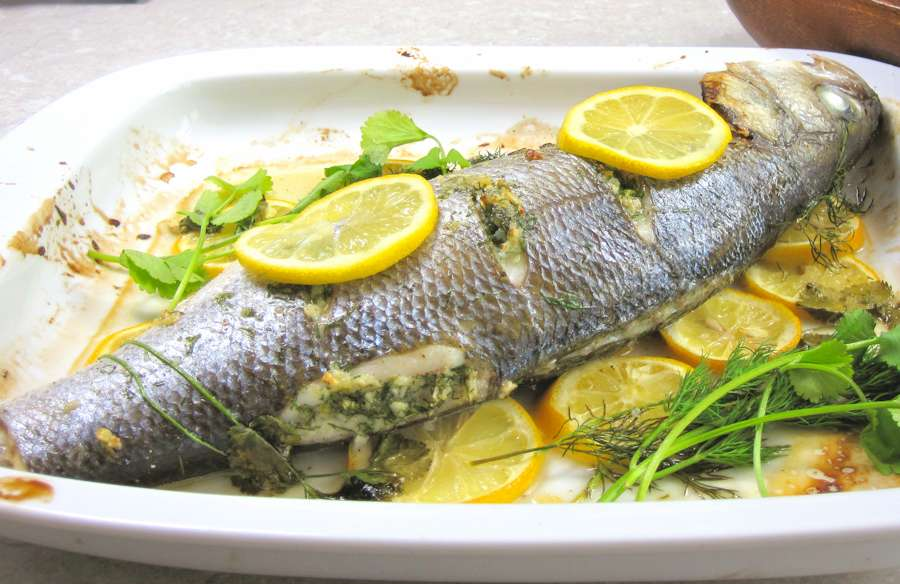
Two sea bass on a Provençal bed of cherry tomatoes, olives, capers and garlic, roasted in a hot oven until the skin blisters and the cooking liquor beneath the fish is deeply, improbably good. Done in twenty-five minutes. Brought to the table in the tray it cooked in, with bread nearby for the juices. The summer fish dish.
Whole fish at the table has a quality that fillets cannot replicate, which is something to do with the fact that it is clearly, visibly, a thing that was recently alive and is now being generously shared. It is not, despite appearances, a technically demanding way to cook: a whole sea bass of moderate size roasts in about twenty-five minutes, needs nothing more than a hot oven, a Provençal base and a decent pour of olive oil, and arrives at the table looking as though considerably more thought went into it than actually did. This is the kind of deceptive simplicity the Finer Edit recipe collection is rather fond of.
I make this dish in summer, or at least in the spirit of summer: for a table outside if the evening permits, with a glass of something cold and a loaf of good bread that is going to be needed for the tray afterwards. The Provençal base — cherry tomatoes, olives, capers, shallots and garlic roasted together in olive oil and white wine beneath the fish — produces a cooking liquor in the twenty-five minutes of roasting that is as good as almost any sauce you could make deliberately. The tomatoes collapse. The garlic sweetens in its skins. The capers and olives give the whole thing a brine and a depth that the white wine amplifies rather than competes with. By the time the fish is done, the tray is a Provençal daube of sorts, the fish perfumed from inside by the stuffed herbs and from below by the bubbling liquor it has been cooking over.
Why Sea Bass
Sea bass is the fish I return to most often for this treatment, and the reason is partly flavour and partly practicality. The flesh is firm enough to handle whole roasting without falling apart, delicate enough to benefit from the aromatic stuffing and the fragrant tray beneath it, and the skin, when properly scored and drizzled with olive oil before roasting, becomes the finest part of the fish: crisp at the edges of each score mark, tightened to the flesh, tasting of the oil and the heat and the particular quality of a good fish properly cooked.
Sea bass is also, at a moderate size of 450 to 500 grams each, a fish that cooks within a clear, manageable time frame. It is not a fish that requires a probe thermometer and anxious monitoring; it is a fish that requires a hot oven, a timer set for twenty-three minutes, and the confidence to trust that it is done when the eye is white and the skewer goes through without resistance. Twenty-three minutes is the time. If it needs two more, give it two more. If it looks done at twenty, trust your eyes over the timer.
Two fish of this size, one per two people, is the relaxed version: not a single large fish carved at the table with ceremony, but a pair of fish from which people help themselves, sharing from the tray, the Provençal base distributed between plates, bread passed around the table for the juices. This is the summer dinner as it should be.
The Provençal Tradition
Provençal cooking is the cooking of the south of France: olive oil rather than butter, garlic without apology, tomatoes in almost everything, the particular brine of olives and capers that gives the cuisine its most recognisable quality, and fresh herbs from the garrigue — thyme, rosemary, bay — whose dry, aromatic character belongs entirely to the landscape they grow in. It is simple cooking built on good produce, and its defining feature is that the oil and the vegetables and the fish do most of the work themselves, without complicated technique intervening.
The combination of tomatoes, olives, capers, garlic and white wine in a roasting tray is close to a daube or a quick tian — the Provençal vegetable bake — and it produces a liquor that would be worth making on its own. Beneath the sea bass it becomes something more: the fish drips its juices into the tray as it cooks, the herbed stuffing perfumes the cavity and then the flesh, and the whole tray emerges from the oven smelling of the coast.
The capers deserve their own note. Salt-packed capers, rinsed before use, are the superior ingredient here: more flavourful, more complex and less sharp than the brine-packed alternative, and the difference in the finished tray is noticeable. They are available in most Italian delis and many good supermarkets, and keeping a jar in the fridge is one of the better storecupboard decisions this magazine can recommend.
The Scoring
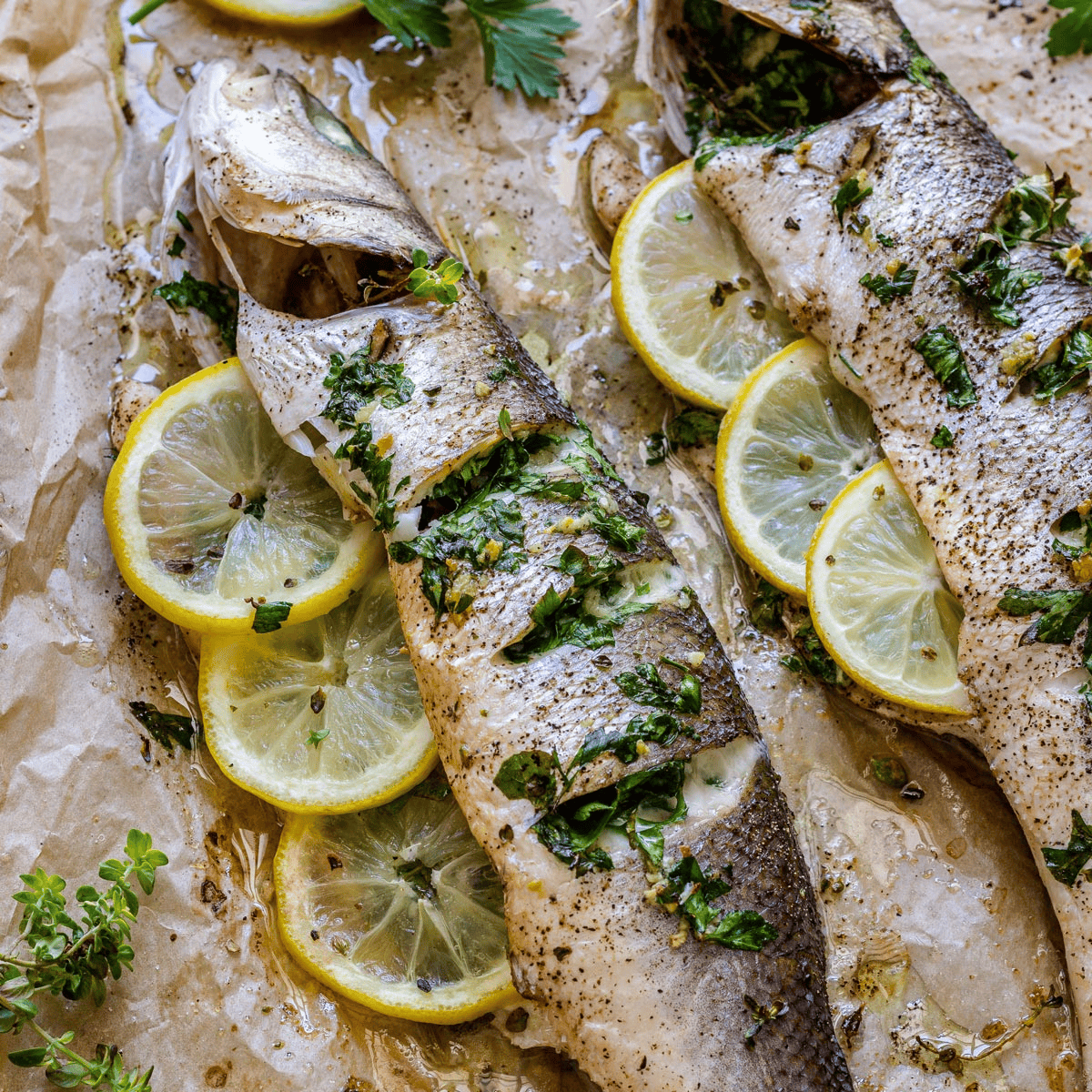
The three or four diagonal cuts made through the skin of each fish before it goes into the oven are not merely decorative, and they are worth doing carefully. A fish roasted without scoring develops tight, contracted skin as the heat reaches it, which prevents the heat from penetrating quickly and evenly into the flesh beneath and can leave the centre of the fish underdone while the edges are perfect. The score marks open as the fish cooks and allow the heat — and the aromatics from inside the cavity — to reach the flesh from two directions simultaneously.
The cuts should go through the skin and the surface layer of flesh, down to but not through the bone. A sharp knife makes this straightforward; a blunt one drags and tears. Three cuts on each side are enough for a 500g fish; four for anything larger. They should run diagonally across the fish from back to belly, angled slightly towards the head, about 3cm apart.
The Stuffing
The cavity of a whole fish is one of the most effective flavour-delivery systems in cooking, and it is criminally underused in most recipes that simply tell you to season the inside and leave it at that. A cavity stuffed with lemon slices, sliced garlic, thyme, rosemary and a bay leaf perfumes the flesh from the inside as it cooks, the heat coaxing the aromatics into the surrounding flesh in a way that cannot be replicated by anything placed on the outside of the fish alone.
The aromatics should sit loosely rather than being packed in tightly: the cavity needs to allow heat to circulate rather than acting as an insulated pocket. A few lemon slices, a couple of garlic slivers, a sprig each of thyme and rosemary, and a bay leaf is the right amount. The stuffing is not meant to be eaten — it is an aromatic rather than a component — and it is worth telling people at the table so they don’t feel obliged to work around it.
How to Know When the Fish Is Done
The eye turns white. The skin at the edges of the score marks pulls away slightly from the flesh. A thin skewer inserted into the thickest part of the fish — just behind the head, at the top of the back — meets no resistance and comes out warm to the touch. These are the signs, and they are more reliable than any timing formula.
Sea bass at 450 to 500 grams roasts at 200°C in approximately 22 to 25 minutes, but the word approximately is load-bearing. A fish straight from the fridge takes two minutes longer. A very thin fish takes two minutes less. A fish that has been at room temperature for thirty minutes before roasting — which it should have been — cooks more evenly and more quickly. Use the signs rather than the timer, and take the fish out on the right side of done rather than the wrong one.
The fish will continue to cook in its residual heat for the five minutes it rests before serving. A fish taken out at the exact moment of perfection will be slightly overdone by the time it reaches the table. Take it out one minute before you think it is ready, and let the resting do the final work.
At the Table
Serving a whole fish at the table from the tray it cooked in is the right approach for this dish, and the technique for eating from a whole fish is simpler than most people expect. The top fillet lifts cleanly away from the bone with a spoon or a fish slice; the spine can then be lifted from the bottom fillet intact, taking the head with it, leaving the bottom fillet ready to be lifted from the tray. None of this requires training or confidence beyond a willingness to approach the fish gently rather than aggressively.
The Provençal base is spooned alongside each portion. The unpeeled garlic cloves, soft and sweet from the oven, are squeezed from their skins onto the plate or pressed into the bread. The basil goes on at the last moment, torn rather than chopped so it stays vivid. The bread comes to the table at the same time as the fish, because the tray after the fish is gone is the part of the meal that requires the most bread.
The Recipe
Serves 4. About 10 minutes’ preparation and 25 minutes’ roasting.
Ingredients
For the Provençal base
- 300g cherry tomatoes
- 100g Niçoise or Kalamata olives, pitted
- 2 tbsp capers, drained and rinsed
- 4 shallots, halved lengthways
- 4 garlic cloves, unpeeled
- 4 fresh thyme sprigs
- 100ml dry white wine or dry vermouth
- 3 tbsp good olive oil
- Sea salt and black pepper
For the fish
- 2 whole sea bass, about 450–500g each, gutted and scaled
- 2 garlic cloves, thinly sliced
- 2 fresh thyme sprigs
- 2 fresh rosemary sprigs
- 2 bay leaves
- 1 lemon, half sliced into rounds, half reserved for squeezing
- 2 tbsp olive oil
- Sea salt and black pepper
To serve
- A small bunch of fresh basil
- Lemon wedges
- Good bread
The Method
- Build the Provençal base. Heat the oven to 200°C (180°C fan). Scatter the cherry tomatoes, olives, capers, shallots, unpeeled garlic cloves and thyme in a large roasting tray. Drizzle with 3 tablespoons of olive oil and pour over the wine. Season and toss briefly to coat. The tray should be large enough for both fish to lie flat without touching.
- Score and season the fish. Make 3 to 4 diagonal cuts through the skin on both sides of each fish, down to but not through the bone. Season generously inside the cavity and on both sides.
- Stuff and lay the fish. Fill each cavity with a few lemon rounds, the sliced garlic, a thyme sprig, a rosemary sprig and a bay leaf. Lay the fish on top of the Provençal base. Drizzle 2 tablespoons of olive oil over the skin.
- Roast. Roast for 22 to 25 minutes until the skin is golden at the score marks, the eye has turned white and a skewer inserted at the thickest point meets no resistance. Do not overcook.
- Rest, finish and bring to the table. Rest for 5 minutes. Squeeze the reserved lemon half over both fish. Drizzle with a little more olive oil. Tear the basil over the tray. Bring the tray to the table with lemon wedges and good bread.
A Few Notes Worth Knowing
On the fish: ask your fishmonger to gut and scale both fish — this takes them thirty seconds and saves a considerable amount of mess at home. If you are buying from a supermarket fish counter, the same request applies and is almost always accommodated.
On sourcing: farmed sea bass from responsible aquaculture is widely available and a good choice. Wild sea bass is exceptional when you can find it and the season is right, but farmed fish from a reliable source is perfectly good for this recipe. The Marine Conservation Society’s Good Fish Guide is the most current reference for responsible sourcing.
On the capers: salt-packed capers rinsed under cold water before use are the most flavourful and worth seeking out. Brine-packed capers work well in their place; drain them thoroughly before adding to the tray.
On the white wine: dry vermouth is an excellent substitute that most kitchens can keep indefinitely, unlike an open bottle of white wine. A tablespoon of Noilly Prat in a sauce is a classic French kitchen technique for precisely this reason.
On what to serve alongside: the Provençal base is the accompaniment, and bread is required for the tray. A simple green salad dressed with good olive oil and a little red wine vinegar is the right companion, something clean and sharp to follow the richness of the fish and the oil. Ratatouille alongside would be Provençal excess of the best kind, if the season and the inclination align. Otherwise, simplicity is completely sufficient.
On the wine: a white from the south of France — a Côtes de Provence, a Picpoul de Pinet, a Bandol blanc — is the natural pairing and makes the meal taste entirely of where the recipe comes from. A good Vermentino from Corsica or Sardinia works equally well and is usually better value. Avoid anything oaked or heavy; the fish and the olive oil need freshness rather than weight in the glass.
This is a home tested recipe, made many times in summer and occasionally, with great satisfaction, in the middle of January when the need for it outweighs the absence of warm weather.
Recipe Card
Recipe Name: A Whole Roasted Sea Bass
Recipe Description : Whole sea bass roasted over a Provençal base of cherry tomatoes, olives, capers, shallots and garlic, finished with lemon and fresh basil and served with bread for the deeply flavoured tray juices.
Serves: Serves 4
Preparation Time: Approximately 10 minutes active preparation
Chilling & Resting Time: 30 minutes at room temperature before roasting, plus 5 minutes resting afterwards
Cooking Time: Approximately 22–25 minutes
Total Time: Approximately 1 hour 10 minutes
Difficulty: Moderate



Get our latest Delivered
Beautiful recipes, inspiration, guides and news that makes you want to live!