Duck Confit with Pommes Sarladaises
Duck Confit with Pommes Sarladaises
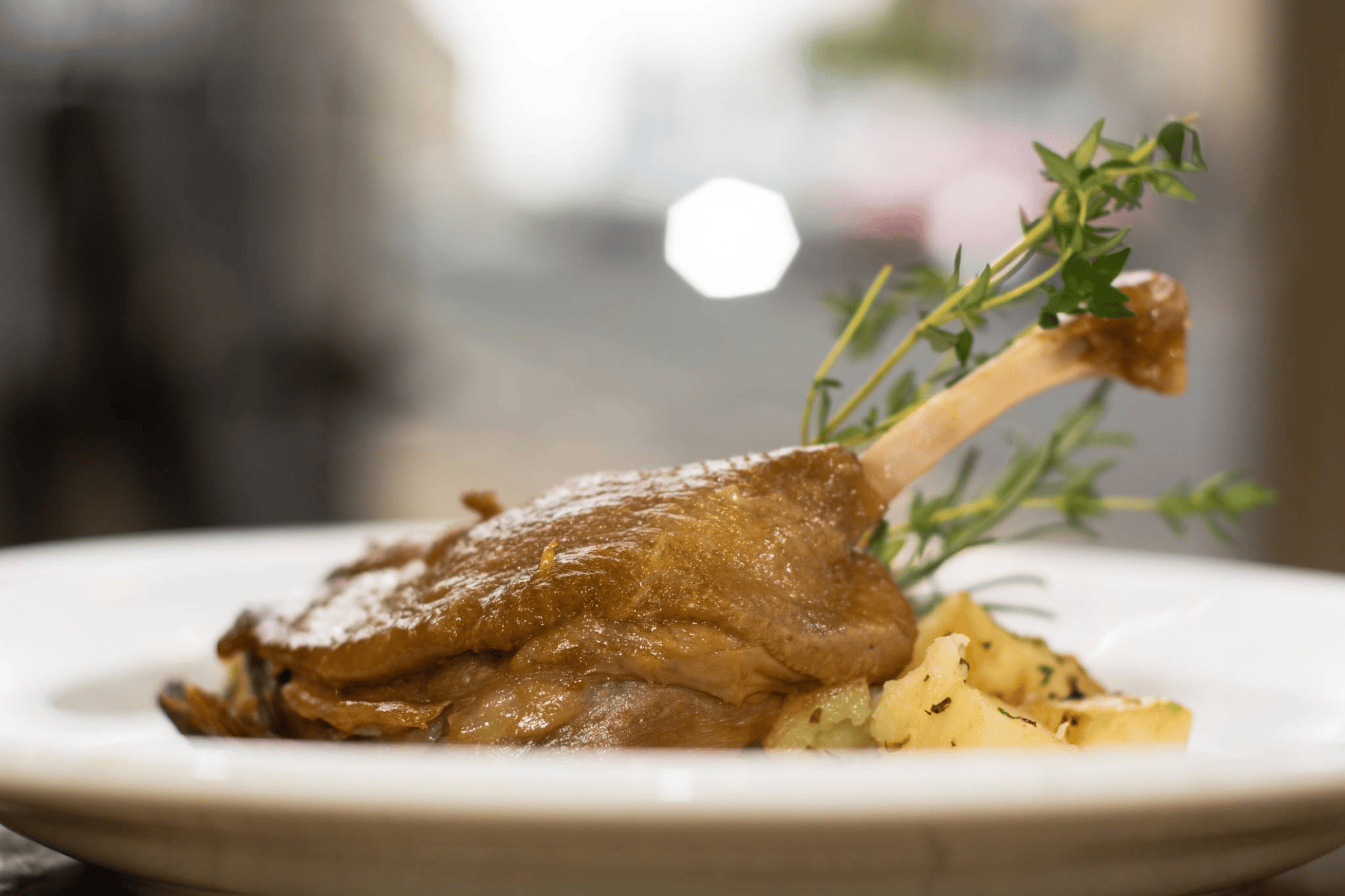
Duck legs cured overnight in salt, thyme and garlic, cooked slowly in their own fat until the meat is completely tender, then crisped in a dry pan until the skin crackles. The fat that remains from the cooking makes the pommes sarladaises alongside. A recipe that spans two days and requires about forty minutes of actual work. The rest is patience, and patience is rewarded.
There are recipes that are impressive because they are technically difficult, and there are recipes that are impressive because of what they produce relative to the effort they ask. Duck confit is the finest example of the second kind. The active work is perhaps forty minutes across two days: ten minutes to rub a cure into four duck legs, a brief rinse and dry the following morning, a few minutes to arrange them in a dish and pour fat over them, and then eight or ten minutes at the end to crisp the skin in a dry pan. The three hours in between, while the fat barely trembles in a low oven and the duck slowly yields to it, require nothing from the cook at all beyond the occasional glance through the oven door.
What comes out is extraordinary. The meat, cooked so gently and so slowly in fat that it never tightens or dries, is tender in a way that no other cooking method for duck leg can produce: giving, almost silky, carrying deep into itself the flavour of the thyme and garlic from the overnight cure. The skin, dried and placed face-down in a cold pan that is then brought to heat, renders its fat over eight to ten minutes and turns into the single most satisfying piece of texture this collection produces — deeply golden, crackled, shattering when you press it with a fork, with the flavour of a duck that has been very well looked after.
The fat left in the dish after the duck comes out is not a by-product to be discarded. It is, for the cook who recognises what it is, the beginning of the pommes sarladaises.
Gascony, and What It Means
The confit technique comes from Gascony, the south-western region of France that covers roughly the territory between Bordeaux and the Pyrenees, and which has given the world a disproportionate number of the things worth eating: foie gras, Armagnac, Bayonne ham, cassoulet, and the confit that is this recipe’s direct ancestor. The Gascon landscape is one of forests, rivers, geese and ducks — the birds raised for their livers, their flesh and, crucially, their fat — and the cooking of the region reflects this abundance with a directness and a richness that has no apology in it.
Confit — from the French confire, to preserve — was originally a preservation technique rather than a culinary statement. Before refrigeration, Gascon farmhouses preserved their duck and goose by salting the meat briefly, cooking it in its own fat, and then storing it submerged in that same fat, sealed in earthenware pots, in the cool of a cellar. The fat excluded air and bacteria; the legs could be kept for months and pulled out as needed, crispened by the fire and eaten through the winter long after the birds themselves were gone.
The practical argument for confit has since been superseded by the refrigerator, but the technique persisted for the same reason all good cooking techniques persist: the result it produces is better than anything the alternatives can achieve. A duck leg confited slowly in fat has a texture and a depth of flavour that roasting or braising cannot match, and the crispness of the skin when properly finished is something you do not forget.
The Fat
Duck fat is the gold of Gascon cooking, and this recipe produces it in quantity as a side effect of making the confit. The fat that comes out of the oven after three hours, strained through a fine sieve and decanted into a clean jar, is a deeply flavoured, amber-coloured cooking medium that will last in the fridge for three months and improve almost everything it touches. Roast potatoes cooked in duck fat are the finest roast potatoes. Eggs fried in a thin film of duck fat are the finest fried eggs. And pommes sarladaises — the potato dish of Sarlat, the medieval town in the Dordogne that sits in the heart of French duck country — cooked in the fat from this specific confit, scented with the same garlic and thyme that cured the duck, are an entirely justifiable reason to make the recipe even if you had no intention of eating the duck at all.
You will need to supplement the fat that renders from the duck legs with bought duck fat or goose fat from a tin — the legs themselves do not produce enough to submerge four of them — but what you buy is largely what you get back, plus the addition of everything the duck has contributed to it during three hours of slow cooking. This fat, strained and stored, is the inheritance of the recipe.
The Cure
The overnight cure serves two purposes: it seasons the duck deeply, the salt penetrating into the muscle rather than sitting on the surface, and it draws a small amount of moisture from the meat, concentrating the flavour slightly before the fat absorbs the rest. Coarse sea salt, dried thyme, crushed garlic and black pepper is the classic Gascon cure, and it is entirely sufficient. The garlic will soften against the skin of the duck during the overnight rest and add its fragrance gently rather than aggressively.
The rinsing before cooking is as important as the cure itself. Salt left on the duck will make it too salty and will cause the fat to foam and bubble rather than sit still and calm. Rinse thoroughly, pat every surface dry, and the fat will behave properly: barely trembling, never boiling, producing a duck that has cooked in warmth rather than heat.
The Skin
The skin of a confited duck leg, properly crisped, is the part of this recipe that most needs its own paragraph. After three hours in fat, the duck skin is soft, pliable and pale, and it has done nothing that looks impressive. What happens in the pan over the following eight to ten minutes is one of the most satisfying transformations in cooking: the remaining fat in the skin slowly renders out into the cold pan as the heat rises, and the skin simultaneously dries and colours, darkening from pale to gold to a deep, crackled, mahogany-edged thing that shatters when you press it.
The cold pan method is essential. Placing the duck skin-side down in a pan that is already hot causes the skin to seize before the fat inside it has had time to render, and you get a surface that is brown but not crisp. The cold pan, brought slowly to heat with the duck already in it, gives the fat time to render gradually before the surface sets, and the result is incomparably better. Eight to ten minutes without touching the duck, without pressing it, without checking it more than necessary — the skin will tell you when it is ready by its colour and the sound it makes when you listen to it.
Pommes Sarladaises
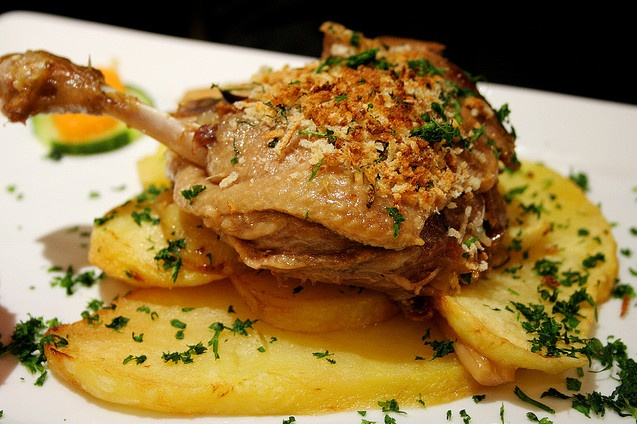
The Dordogne town of Sarlat, with its extraordinary medieval centre of honey-coloured limestone, gives its name to one of the great potato dishes in French cooking, and the logic of the dish is perfectly Gascon: potatoes, cooked slowly in duck fat with garlic, pressed and turned until both sides are golden. No cream, no cheese — nothing that would dilute or compete with the fat itself, which is the point. The pommes sarladaises are a vehicle for the duck fat, and the duck fat is why they taste the way they do.
Waxy potatoes — Charlotte, Ratte, or any firm-fleshed variety — are the right choice. Floury potatoes absorb more fat and cook more quickly, but they can break apart under the pressing and turning that the sarladaises require. Charlotte potatoes hold their structure while still becoming yielding and golden, and they are the choice most consistently produced in the Périgord itself.
The turning is the one moment of technical difficulty in the whole recipe, and “difficulty” is generous. After twenty-five minutes, the bottom layer of potato will be golden and the whole mass will be tender. Slide the potatoes onto a large plate, return the pan to the heat, and tip the plate back into the pan so the potatoes land upside-down, the golden side now facing up. Ten more minutes and the new bottom is golden to match. The parsley goes on at the end, freshly chopped, scattered over the golden surface.
The Recipe
Serves 4. Day one: 10 minutes. Day two: 30 minutes active, 3 hours in the oven.
Ingredients
For the duck confit
- 4 duck legs
- 25g coarse sea salt
- 1 tsp coarsely ground black pepper
- Leaves from 4 fresh thyme sprigs
- 2 garlic cloves, lightly crushed
- 3 bay leaves
- 600g duck fat or goose fat
For the pommes sarladaises
- 1kg waxy potatoes, peeled and sliced 3mm thin
- 3 to 4 tbsp duck fat, from the confit
- 2 garlic cloves, finely sliced
- A small bunch of flat-leaf parsley, finely chopped
- Sea salt and black pepper
The Method
- Cure the duck legs overnight. Mix the salt, pepper and thyme leaves. Rub all over the duck legs — on the skin, under the skin and on the meat side. Add the bay leaves and remaining thyme sprigs. Cover and refrigerate for 12 to 24 hours.
- Rinse and dry. Rinse the legs thoroughly under cold running water. Pat every surface completely dry. Discard the cure.
- Confit in fat. Heat the oven to 120°C (100°C fan). Arrange the duck legs snugly in a deep ovenproof dish. Melt the duck fat and pour over until the legs are submerged by at least 1cm. Cook for 2 hours 30 minutes to 3 hours until the meat pulls from the bone easily. The fat should barely tremble throughout.
- Crisp the skin. Lift the legs from the fat and pat the skin completely dry. Place skin-side down in a cold, dry frying pan. Bring to medium-high heat and cook without moving for 8 to 10 minutes until the skin is deeply golden and crackled. Turn briefly for 2 minutes. Rest for 5 minutes.
- Make the pommes sarladaises. Heat 3 to 4 tablespoons of the warm duck fat in a wide, heavy frying pan over medium heat. Layer the potato slices in the pan, seasoning each layer and scattering the sliced garlic between layers. Press firmly with a spatula. Cook over medium-low heat for 20 to 25 minutes until the bottom is golden and the potatoes are tender throughout. Slide onto a plate, return to the pan upside-down, and cook for a further 8 to 10 minutes until the new bottom is golden. Scatter with parsley and serve alongside the duck.
A Few Notes Worth Knowing
On buying duck fat: a 350g tin from a supermarket or French deli, combined with the fat that renders from the duck legs as they cook, is usually enough to submerge four legs. The legs themselves render a significant amount of fat during the confit. If uncertain, buy a second tin — surplus duck fat is the opposite of a problem.
On storing the confit: if you wish to store the duck legs before eating them, leave them in the fat after cooking, allow it to cool and solidify, and refrigerate. The legs will keep for up to three months this way, and they will be better for the wait. To use, gently warm the pot until the fat melts and lift the legs out.
On the potatoes: do not use a mandoline for the sarladaises. The 3mm slices required are thin but not paper-thin, and a mandoline set at 3mm tends to produce slices that are slightly too thin and break during turning. A sharp knife and a careful eye produce the right thickness consistently enough.
On what else to serve alongside: a simple green salad dressed with a sharp mustard vinaigrette is the correct companion — something clean and acidic to cut through the richness of both the duck and the potatoes. Nothing else is needed.
On the wine: a Madiran from the Gers, made from Tannat, is the regional choice and a good one: a wine with enough structure and dark fruit to stand alongside the duck without being overwhelmed by it. A Cahors, from the same south-western region, works equally well. Both are worth seeking out specifically for this dish, and both are considerably more affordable than their quality suggests they should be.
This is my own recipe, made for the occasions that deserve it. The technique draws on the Gascon tradition of confit dating from before refrigeration, still practised in essentially the same way.
Recipe Card
Recipe Name: Duck Confit with Pommes Sarladaises
Recipe Description : Duck legs cured overnight with salt, thyme, garlic and bay, slow-cooked in duck fat until tender, then crisped until crackling and served with golden pommes sarladaises cooked in the same fat.
Serves: Serves 4
Preparation Time: Approximately 40 minutes active preparation across two days
Chilling & Resting Time: 12–24 hours curing time, plus 5 minutes resting after crisping
Cooking Time: Approximately 3 hours 45 minutes to 4 hours, including slow confit cooking, crisping and cooking the pommes sarladaises
Total Time: Approximately 16–28 hours, including overnight curing
Difficulty: Considered



Get our latest Delivered
Beautiful recipes, inspiration, guides and news that makes you want to live!