Coq au Vin
Coq au Vin
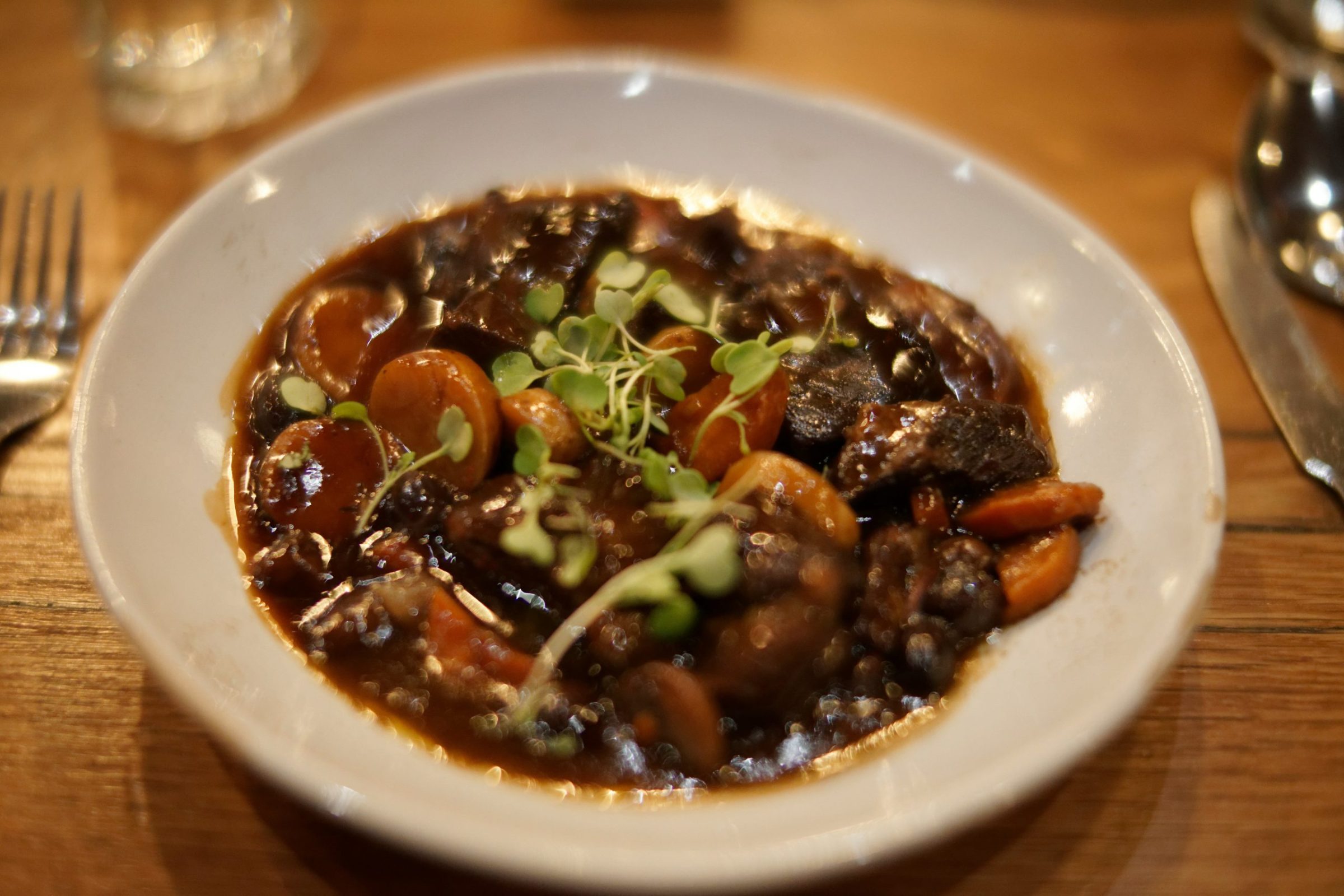
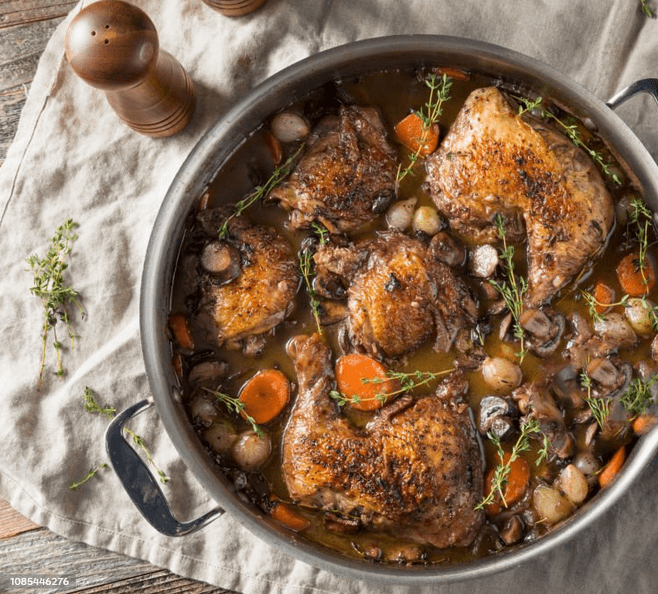
A Burgundian braise of chicken, lardons, pearl onions and mushrooms in red wine, with a cognac flambé that earns its place and a sauce worth every minute of the reduction. Better the next day. The kind of dish that makes an occasion of a Sunday.
There is a category of French cooking that looks impressive, requires very little technical skill, and tastes like considerably more effort than it actually involves. Coq au vin belongs at the top of that category. It is, at its foundations, a braise: chicken cooked slowly in red wine with bacon, mushrooms and small onions until the meat is tender enough to leave the bone and the sauce has reduced to something dark and glossy and deeply good. The techniques involved are browning, reducing and patience, none of which require culinary training, only attention.
What it does require is time, and the willingness to treat a Sunday afternoon as an occasion for cooking rather than merely the gap between lunch and supper. Coq au vin is not a Tuesday-evening recipe. It is the recipe for the day when you have an hour to spend in the kitchen, a good bottle of Burgundy to cook with and another to drink alongside, and someone worth making it for.
Rooster, Wine and a Very Long History
The name is literal: coq au vin means rooster in wine. The original dish was made with an old rooster — a coq — that had spent its working life in the farmyard and required hours of slow cooking in wine to become tender. The wine was not a luxury ingredient in this context; it was practical. Acid tenderises tough meat, alcohol extracts flavour, and the long braise in a decent Burgundy turned something that would otherwise be inedible into something remarkable.
Legend connects the dish to the Gauls and even to Julius Caesar, though food historians are rightly sceptical of origin stories that require Roman generals. What is more certain is that the dish was born of rural French thrift — using what was available, wasting nothing, making the most of a bird past its productive years — and that it has been a staple of the Burgundy region for centuries. The recipe was first formally documented in the early twentieth century, but the principle is far older than any cookbook.
What transformed coq au vin from a regional peasant dish into a recipe known worldwide was largely Julia Child. When Mastering the Art of French Cooking appeared in 1961, American home cooks encountered a dish they could make in their own kitchens that tasted of France, and coq au vin became the gateway recipe through which an entire generation learned to braise. It is a testament to how good the dish genuinely is that it has survived that level of fame without becoming a cliché.
Today’s coq au vin is made with ordinary chicken rather than rooster, which cooks considerably faster and requires less wine to persuade into tenderness. Dark meat — thighs and drumsticks — handles the long braise better than breast, which can dry out. The wine is still Burgundy, or at least Pinot Noir. And the principle is unchanged: patience, layered flavour and a sauce that earns its glossiness through proper reduction.
What Makes It
Coq au vin has more components than most braises, and each one is doing specific work. Understanding what each element contributes makes the dish easier to cook and the result more reliably good.
The wine is the soul of it. A full bottle, or close to it, reduced by a third before the chicken even enters the picture, which burns off the raw alcohol and concentrates the colour and flavour into something deeper and less sharp. The reduction is not a step to skip: wine added straight to a braise without first reducing it can give the finished sauce a slightly harsh, one-dimensional quality that no amount of simmering quite corrects.
The lardons are not a garnish but a foundation. Their fat rendered into the pan is what the chicken browns in; their smoky, salty flavour runs through the entire sauce from the first step to the last. They are cooked separately from the braise and returned at the end so they retain their texture rather than dissolving into softness.
The cognac flambé is optional in the strict sense that the dish exists without it, but it is worth doing for reasons beyond the theatre. Flambéing burns off the residual alcohol in the cognac and leaves behind a concentrated, slightly caramelised quality in the pan that ordinary deglazing does not produce. It also, it should be said, looks rather extraordinary. Keep a long match or a long-handled lighter nearby, take the pan off the heat before you pour, and do not lean over the pot.
The mushrooms and pearl onions are prepared separately from the braise and added at the end. This is the step most home recipes omit and most restaurant versions observe, and the difference is visible on the plate: onions and mushrooms cooked separately are caramelised and distinct; those braised from the start are soft and lost in the sauce. Ten minutes of extra washing-up earns a much better dish.
The beurre manié — equal parts softened butter and flour worked into a paste — is the classical French method for thickening a braise without lumps. It goes in at the end, whisked into the simmering sauce a little at a time, and produces a glossiness that flour-thickened-at-the-start cannot match. It is fifteen seconds of work and it makes a material difference to the finished sauce.
The Method
1. Reduce the wine first. Pour the wine into a saucepan and bring to a boil. Reduce by one third over high heat, about 10 minutes. This concentrates the flavour and colour and removes the raw edge of the alcohol. Set aside to cool.
2. Brown the chicken in batches. Pat the chicken completely dry and season all over with salt and pepper. Heat the olive oil in a large, heavy casserole over medium-high heat. Brown the chicken pieces in batches, skin-side down first, until deeply golden on all sides. Do not crowd the pan — crowded chicken steams rather than colours, and the colour is where much of the flavour begins. Set aside.
3. Render the lardons. In the same casserole, fry the lardons until the fat has rendered and they are beginning to crisp at the edges. Remove with a slotted spoon and set aside, leaving the fat in the pan.
4. The flambé. Add the garlic to the fat and cook for 1 minute until fragrant. Return all the chicken to the casserole. Pour in the cognac. Take the pan off the heat entirely, then carefully ignite the cognac with a long match or long-handled lighter. Stand back. Avert your face. Do not lean over the pot. Let the flames die down naturally, about 30 seconds, then return the pan to the heat.
5. Braise. Stir in the tomato paste, then pour in the reduced wine and enough chicken stock to just cover the chicken. Add the thyme and bay leaves. Bring to a gentle simmer, then cover and cook over the lowest possible heat, or in a 160°C oven, for 1 hour until the chicken is completely tender and beginning to leave the bone.
6. Prepare the garnish. While the chicken braises, melt a knob of butter in a frying pan. Add the pearl onions with a pinch of sugar and a splash of water, cover loosely with a piece of baking paper and cook over medium heat for about 15 minutes until tender and golden. Remove, then turn up the heat in the same pan, add the mushrooms and sauté until deeply caramelised. Set both aside.
- Reduce and thicken the sauce. Lift out the chicken and set aside. Discard the thyme sprigs and bay leaves. Bring the braising liquid to a rolling boil and reduce by about a third until it deepens in colour and begins to coat a spoon. Meanwhile, work the butter and flour together with your fingers into a smooth paste. Whisk it into the simmering sauce a little at a time until the sauce is glossy and coats the back of a spoon generously. Taste for seasoning.
- Bring it all together. Return the chicken, lardons, pearl onions and mushrooms to the casserole. Simmer gently for 10 minutes so everything warms through and the flavours marry. Scatter with chopped parsley and serve directly from the pot.
The Recipe
Serves 4. About 40 minutes’ active work and 1 hour’s braising.
Ingredients
For the braise
- 1 whole free-range chicken, jointed into 8 pieces (or 8 bone-in thighs and drumsticks)
- 750ml good red Burgundy or Pinot Noir
- 200g lardons or thick-cut smoked bacon, cut into cubes
- 3 garlic cloves, finely sliced
- 1 tbsp tomato paste
- 200ml good chicken stock
- 60ml cognac or Armagnac
- 4 fresh thyme sprigs
- 2 bay leaves
- 2 tbsp olive oil
- Sea salt and black pepper
For the garnish
- 200g pearl onions or small shallots, peeled
- 250g chestnut mushrooms, halved or quartered if large
- A knob of butter
- A pinch of caster sugar
To finish
- 15g unsalted butter, softened
- 15g plain flour
- A small handful of flat-leaf parsley, chopped
A Few Notes Worth Knowing
On the wine: use something you would genuinely enjoy drinking, because the flavour concentrates considerably during reduction and braising. A thin, acidic or over-tannic wine produces a thin, acidic sauce. A proper Burgundy or a decent Pinot Noir from anywhere produces a proper sauce. This is not the recipe for the bottle you’d rather not finish.
On dark versus white meat: bone-in thighs and drumsticks are the most forgiving cuts for a long braise and the ones most likely to give you chicken that is tender all the way to the bone without the breast drying out. If you use a whole jointed bird, the breast pieces will cook faster than the dark meat; remove them from the braise after 35 to 40 minutes and return them with the garnish at step eight.
On peeling pearl onions: blanch them in boiling water for 2 minutes, drain, then the skins slip off easily with a gentle squeeze. Frozen pearl onions, thawed, skip this step entirely and are a perfectly respectable shortcut.
On making ahead: this is one of the finest make-ahead dishes in the French repertoire. Made one or two days before you need it, refrigerated, and reheated gently over low heat, it is reliably better than on the day it was cooked. The wine softens, the chicken relaxes further into the sauce, and the flavours settle into something deeper and more unified. Skim the fat from the surface before reheating, and add a splash of stock if the sauce has thickened too much in the fridge.
On what to serve alongside: mashed potato is the canonical choice and earns its place by absorbing the sauce. Plain boiled new potatoes with butter and parsley are equally good if you’d rather not spend the time on a mash. Buttered egg noodles work beautifully for the same reason. A green salad with a sharp mustard dressing afterwards, to cut the richness, is not essential but is always appreciated. And a glass of the Burgundy you cooked with, to drink alongside it, is the only natural conclusion.
This is a researched recipe, built from the classical Burgundian tradition and refined through the work of many cooks before us. The history draws on the documented origins of coq au vin and the influence of Julia Child’s Mastering the Art of French Cooking.
Recipe Card
Recipe Name: Coq au Vin
Recipe Description : A classic Burgundian braise of chicken, lardons, pearl onions and mushrooms in red wine, finished with cognac and a deeply reduced, glossy sauce.
Serves: Serves 4
Preparation Time: Approximately 40 minutes active preparation
Chilling & Resting Time: No resting time required; for the best flavour, refrigerate overnight before reheating
Cooking Time: Approximately 1 hour 40 minutes
Total Time: Approximately 2 hours
Difficulty: Considered


Get our latest Delivered
Beautiful recipes, inspiration, guides and news that makes you want to live!