Banana Bread Recipe with Muscovado and Walnuts
Banana Bread
The house version: very overripe bananas, muscovado sugar, toasted walnuts, a low oven and the self-restraint not to cut it until the next day. Made entirely from what is already going soft on the counter. Better, as the best things often are, for being left overnight.
There is a particular kitchen pleasure in making something excellent from something that was heading towards the bin. Banana bread exists because of overripe bananas — because someone, at some point, looked at four blackened, collapsed bananas and decided that the situation called for ingenuity rather than disposal. The result is one of the most widely loved things a domestic kitchen produces, and also one of the most widely made badly: too pale, too dry, too sweet in a one-dimensional way that tastes of banana extract rather than actual banana, or with a crumb so light and airy that it might as well be a different product entirely.
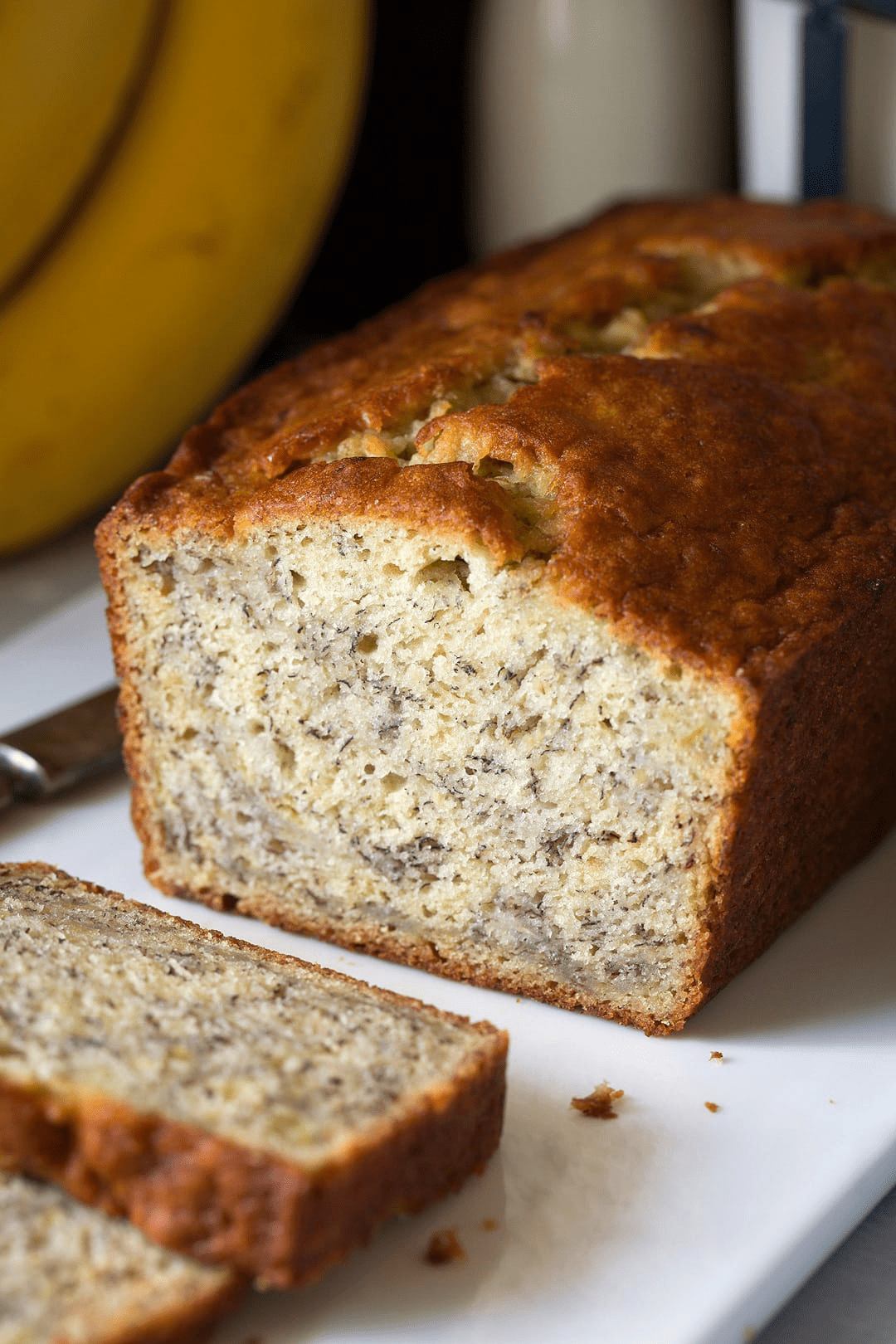
The version I make at home is none of those things, and the reason is straightforward: it leans into what banana bread should actually be rather than trying to approximate a different kind of cake. Dense. Fudgy. Dark with muscovado. The banana flavour genuinely assertive because the bananas went in genuinely overripe. The walnuts toasted rather than raw, which matters more than it seems to. And a low oven and a long bake that produces a crumb with real texture rather than the dry, crumbling desiccation of a loaf that was cooked too hot and too fast.
This is the recipe I make when the bananas on the counter have reached the point where nobody will eat them as a banana but everything about them is right for baking. It is a ten-minute job and a seventy-minute wait, and the waiting is entirely the point.
The Bananas, and Why They Must Be Black
The first and most important rule of banana bread is the one most often ignored: the bananas must be genuinely, properly, alarmingly overripe. Not the slightly soft, yellow-with-brown-spots ripe that supermarkets label as “ready to eat.” Not the ones that bend slightly when pressed. The ones that are black-skinned, soft to the point of collapse, and smell intensely, almost fermentedly, sweet.
The reason is chemistry. As a banana ripens, its starches convert to sugars — fructose, glucose, sucrose — and the concentration of those sugars increases dramatically as the banana continues past the point of eating. A very overripe banana has a sugar content roughly double that of a just-ripe one, and it has also developed a depth of flavour — caramel notes, something almost like vanilla — that a fresh banana simply does not have. This is what produces banana bread that tastes of banana rather than banana-flavoured cake mix.
If your bananas are not yet ready, do not rush them into the oven. Leave them unwrapped on the counter for another two or three days and check again. If time is short, there is an emergency method: unpeeled bananas, placed on a baking tray and roasted at 180°C for fifteen minutes until the skins are uniformly black and the flesh inside has softened to a deeply sweet, syrupy consistency. It is not quite the same as naturally ripened, but it is considerably better than insufficiently ripe.
The Sugar
Muscovado sugar is the correct choice for banana bread, and it changes the character of the loaf in a way that white caster sugar cannot compensate for. Muscovado is an unrefined brown sugar with a high molasses content — it is darker, stickier and more pungent than light brown sugar, with flavours of toffee and a slight bitterness that prevents the finished loaf from being merely sweet. Against the banana and the toasted walnuts, it adds a depth of flavour that makes the first slice considerably more interesting than the same loaf made with white sugar, and the colour it gives the crumb — a warm, deep brown rather than pale yellow — is both more appetising and more honest about what the loaf is.
Light muscovado is the version I use, which is slightly less intense than dark muscovado and produces a loaf that is flavourful without veering into molasses territory. Dark muscovado works beautifully if you want something more emphatic, and the two can be mixed in whatever proportion the contents of your baking cupboard suggest.
The Sour Cream
Two tablespoons of sour cream or full-fat Greek yogurt is the ingredient most banana bread recipes leave out and the one that makes the most consistent difference to the crumb. The fat and the slight acidity both contribute: the fat adds moisture and richness without the weight of extra butter or oil, and the acidity reacts with the bicarbonate of soda to produce a slightly more tender, open crumb than the loaf would have without it. It also tempers the sweetness of the very ripe bananas slightly, adding a note that keeps the loaf from tasting only of sugar.
Full-fat is not negotiable here. Low-fat sour cream contains more water and less fat, which reverses both contributions. Use either full-fat sour cream or full-fat Greek yogurt — the flavour difference between the two in the finished loaf is negligible.
Bicarbonate of Soda, Not Baking Powder
Banana bread is leavened with bicarbonate of soda rather than baking powder, and the distinction matters for two reasons. Bicarbonate of soda reacts with the acid in the overripe bananas, the sour cream and the muscovado to produce carbon dioxide and a rise that is appropriate to the density of the loaf rather than excessive. It also produces a slight browning and deepening of flavour, through the Maillard reaction, that gives banana bread its characteristic dark crust and its rich, complex base note. Baking powder produces a different kind of rise — faster, higher, with less flavour development — and results in a loaf with a lighter, more cakey crumb that is not what this recipe is going for.
The Walnuts, and Why They Must Be Toasted
Banana bread is leavened with bicarbonate of soda rather than baking powder, and the distinction matters for two reasons. Bicarbonate of soda reacts with the acid in the overripe bananas, the sour cream and the muscovado to produce carbon dioxide and a rise that is appropriate to the density of the loaf rather than excessive. It also produces a slight browning and deepening of flavour, through the Maillard reaction, that gives banana bread its characteristic dark crust and its rich, complex base note. Baking powder produces a different kind of rise — faster, higher, with less flavour development — and results in a loaf with a lighter, more cakey crumb that is not what this recipe is going for.
The Low Oven
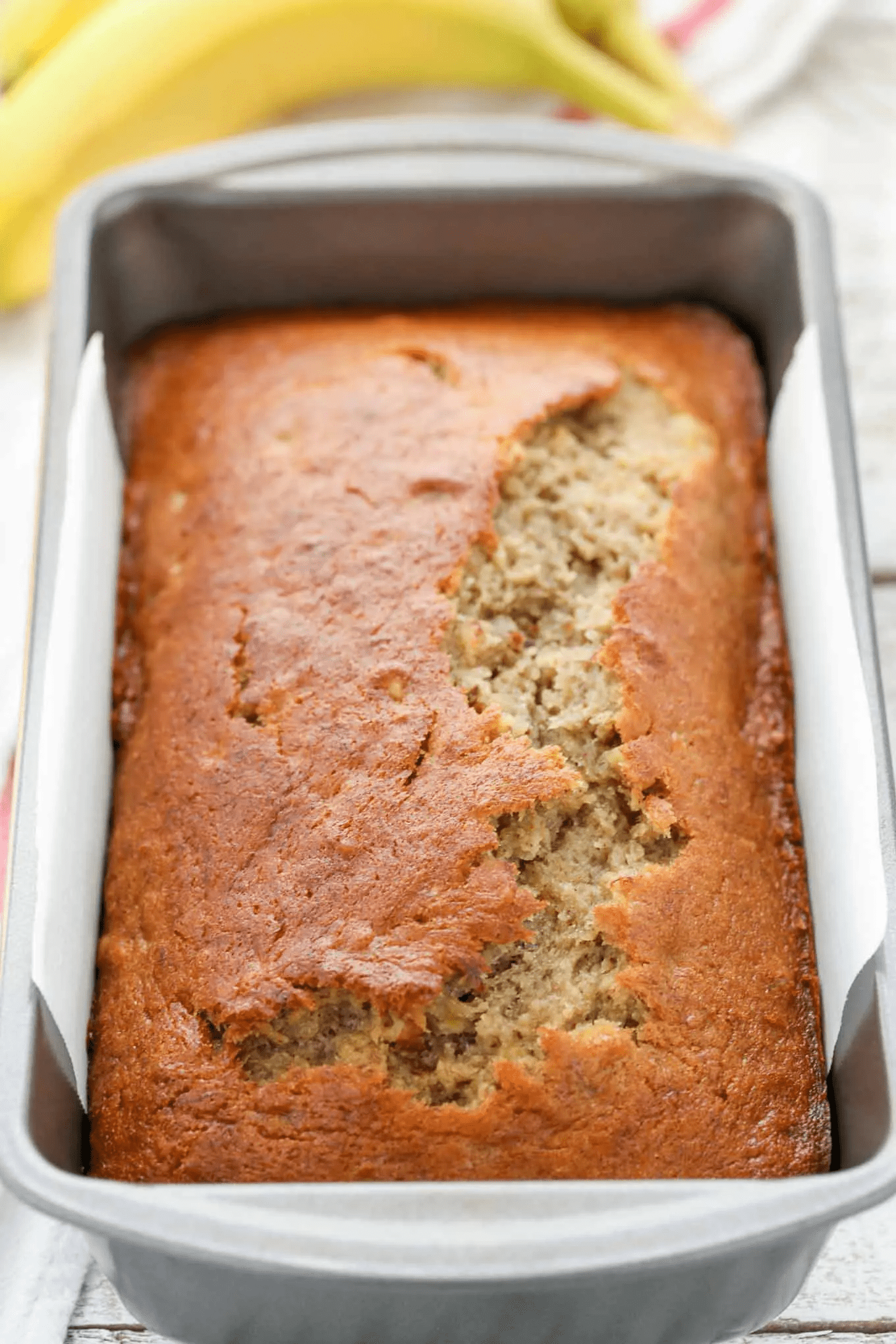
170°C is cooler than most loaf cakes bake at, and it is cooler deliberately. A banana bread baked at 180 or 190°C tends to brown on the outside before the dense, wet interior has finished cooking, producing a loaf with a dry, thick crust and a centre that is either slightly underdone or, in the attempt to cook it through, dried out by the prolonged heat. At 170°C the heat penetrates more evenly and the crust develops over a longer period, producing the deep golden top and the moist, dense crumb that is the whole point. An extra ten minutes in a cooler oven is a better outcome than ten minutes less in a hotter one.
The Next Day
The instruction to wait before cutting feels unkind when the loaf comes out of the oven smelling the way it does, and I understand if it is ignored at least once. But banana bread improves overnight with a completeness that few baked things do. The crumb, which is soft and slightly yielding when warm, sets to a more satisfying, fudgy density as it cools and rests. The crust, which is slightly crisp and crunchy from the demerara when fresh, softens overnight into something thicker and more caramel-like. The flavours deepen. The loaf that you wrap and leave on the counter tonight is a noticeably better loaf tomorrow morning, and the slice you eat with your coffee at ten o’clock the following day is the version the recipe is aiming for.
The Recipe
Makes one 900g loaf, cutting into about 10 slices. About 10 minutes’ active work and 65 to 70 minutes’ baking.
Ingredients
- 4 very overripe bananas (about 300g mashed), plus 1 extra halved lengthwise for the top
- 150g light muscovado sugar
- 2 large eggs, at room temperature
- 120ml unsalted butter, melted and cooled slightly
- 2 tbsp full-fat sour cream or Greek yogurt
- 1 tsp vanilla extract
- 180g plain flour
- 1 tsp bicarbonate of soda
- ½ tsp fine sea salt
- 1 tsp ground cinnamon
- 100g walnuts, roughly chopped and toasted
- 1 tbsp demerara sugar, for the top
The Method
- Prepare and toast the walnuts. Heat the oven to 170°C (150°C fan). Grease a 900g loaf tin and line it with baking paper, leaving an overhang on the long sides. Toast the walnuts in a dry frying pan over medium heat for 3 to 4 minutes, stirring, until fragrant and deepened in colour. Set aside to cool.
- Mash the bananas and combine the wet ingredients. Peel the four overripe bananas and mash thoroughly in a large bowl. A few lumps are fine — banana pockets in the finished loaf are a pleasure. Add the muscovado sugar, eggs, melted butter, sour cream and vanilla and whisk until combined.
- Fold in the flour and walnuts — gently. Sift the flour, bicarbonate of soda, salt and cinnamon over the banana mixture and fold in with a large spatula until just combined. Stop the moment the flour disappears. Lumps are fine. Overmixing develops gluten and produces a tough, rubbery loaf rather than a dense, tender one. Fold in the cooled toasted walnuts.
- Into the tin. Pour the batter into the prepared tin and smooth the top lightly. Place the extra banana halves cut-side up along the top, pressing gently into the surface. Scatter the demerara sugar over everything.
- Bake low and slow. Bake for 60 to 70 minutes until a skewer inserted into the centre comes out with a few moist crumbs but no wet batter. The top should be deep golden brown and the banana halves caramelised. If the top is browning too quickly, cover loosely with foil for the final 15 minutes.
- Cool before cutting. Leave in the tin for 15 minutes before lifting out using the paper overhang and transferring to a wire rack. Wait until at least room temperature before cutting — preferably until the next day.
A Few Notes Worth Knowing
On ripeness: if you have never let a banana go genuinely black before using it for baking, do it once and note the difference. The banana bread made from very black bananas and the one made from merely spotty ones are meaningfully different products, and the effort involved in letting the bananas ripen is no effort at all.
On the butter: melted butter rather than creamed produces a denser, moister crumb, which is what this recipe wants. The butter should be cooled to just above room temperature before it goes in — hot butter added to eggs can scramble them, and the scramble does not improve the loaf.
On the walnuts: pecans work equally well for those who prefer a slightly sweeter, less bitter nut. Dark chocolate chips — 80g or so — folded in with the walnuts produce a version that is considerably more indulgent and not at all unwelcome.
On the demerara top: it produces a faintly crunchy, caramelised lid that is one of the loaf’s most enjoyable features when the bread is fresh, and softens overnight to something more caramel-like. If you do not have demerara, a few thin slices of banana pressed into the top before baking and dusted with caster sugar work in a similar way.
On storing: wrapped tightly in beeswax wrap or cling film, the loaf keeps at room temperature for four days and genuinely improves across the first two. It also freezes well, either whole or sliced, for up to three months, and defrosts quickly at room temperature or in a low oven.
On eating: a thick slice, either plain or spread with a little salted butter, alongside a cup of very good coffee, at some point in the late morning when neither breakfast nor lunch quite applies. That is the ideal context for banana bread, and this recipe is made exactly for it.
This is my own recipe, the version I make most often and return to most reliably – My family love this version and it’s not too exotic for our younger palates to enjoy!
Recipe Card
Recipe Name: Banana Bread
Recipe Description : A dark, moist banana bread made with very overripe bananas, muscovado sugar and toasted walnuts, finished with caramelised banana and a crisp demerara top.
Serves: Makes one 900g loaf, approximately 10 slices
Preparation Time: Approximately 10 minutes active preparation
Chilling & Resting Time: 15 minutes cooling in the tin, followed by cooling completely before slicing; resting overnight is strongly recommended
Cooking Time: Approximately 65–70 minutes
Total Time: Approximately 2 hours minimum, including cooling; best prepared the day before
Difficulty: Easy



Get our latest Delivered
Beautiful recipes, inspiration, guides and news that makes you want to live!