A Proper Shepherd’s Pie
Shepherd’s Pie
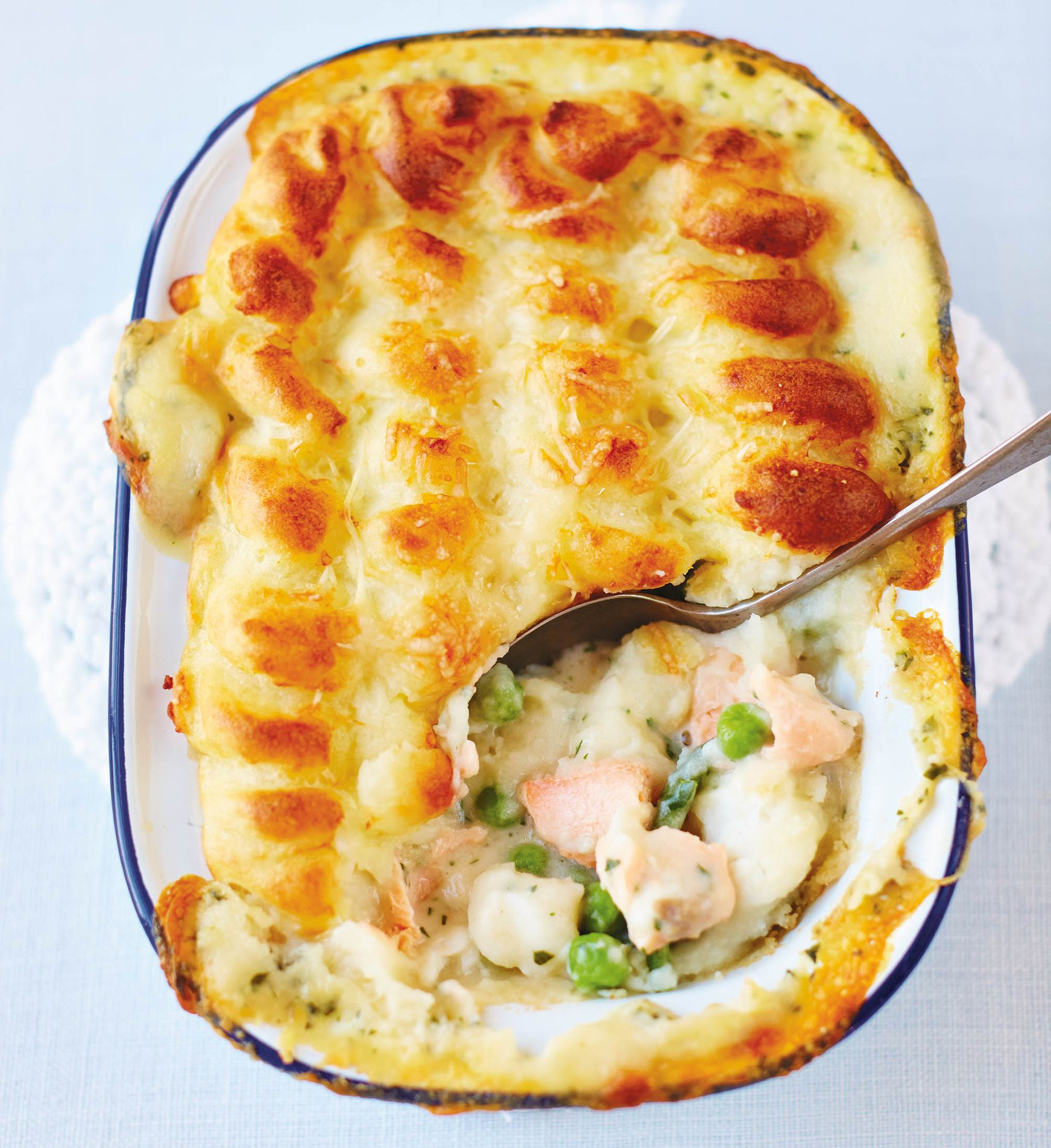
Not the mince version. A slow-braised lamb shoulder, pulled apart into its own dark, rosemary-scented juices, topped with butter-and-cream mash and finished with Parmesan until the crust is golden and crackling. Worth every hour it asks of you.
Let me be clear about something from the start. There are two shepherd’s pies: the one made with mince, which is entirely adequate and has fed generations of British families without complaint, and the one made with braised lamb shoulder, pulled from the bone and folded back into the dark, reduced juices of its own cooking. The second one is what shepherd’s pie was always trying to be. It is what this recipe is.
The difference is not subtle. Mince shepherd’s pie is a weeknight dish, produced in forty minutes and eaten gratefully on a Tuesday. Braised shoulder shepherd’s pie is a weekend event, a Sunday project that fills the kitchen with a smell so good from the first hour that it becomes difficult to think about anything else. The filling is richer, darker, more complex and considerably more giving: every forkful contains shredded meat so tender it barely holds together, surrounded by gravy that has been reducing and concentrating all afternoon. The mash on top, made with enough butter and cream to be impolite, finishes under a Parmesan crust that crackles when you break through it.
This is the version worth making when you have time, company and a cold enough day to justify the oven being on for several hours.
The History Of A Dish Born From “Nothing Wasted”
Shepherd’s pie has more interesting origins than its reputation as a humble weeknight staple might suggest.
The dish’s predecessor, cottage pie, was first documented in England in 1791, named for the cottages of the rural working class who made it. The principle was frugality: after the Sunday roast, whatever meat remained was combined with the pan drippings, a little onion and whatever vegetables were to hand, then topped with mashed potato — a relatively new and appealingly cheap ingredient that had only become a staple for ordinary British households in the latter part of the eighteenth century. Baking the whole thing in the oven transformed leftovers into something that felt entirely new. It was ingenious, practical and genuinely good, which is a combination that tends to endure.
The term shepherd’s pie arrived in the middle of the nineteenth century, making the distinction that matters: a shepherd’s pie is made with lamb, because shepherds tend sheep. Cottage pie is made with beef. The names have been used interchangeably for so long that the distinction is now more observed than consistently applied, but the logic behind it is pleasingly direct. The dish took the name of the people who raised the animal it was made from, which gives it a kind of agricultural honesty few other recipes can claim.
What is quietly fascinating about the history is that shepherd’s pie began, like so many enduring dishes, as a way of using what would otherwise be wasted. Mutton that had seen better days. The heel of a roast that was too small to serve again. Vegetables beginning to soften. The mashed potato lid was not a deliberate culinary choice so much as the most practical available substitute for pastry in households that could not always afford flour and fat. The genius was accidental, or at least circumstantial, and then it became classic, which is how the best food traditions tend to work.
What I am proposing today is a version that takes the spirit of that original — resourceful, generous, deeply comforting — and gives it the treatment the concept has always deserved. A lamb shoulder braised until it falls apart rather than minced from a packet. A sauce reduced from the braising liquid rather than built from stock cubes. A mash that would embarrass anything modest. The history of this dish is about making something exceptional from what you have. We simply have rather more to work with.
Why Shoulder, and Why Braised
The choice of cut is the most important decision in the recipe, and the argument for shoulder over any other part of the lamb is straightforward. Shoulder is a working muscle, full of collagen and fat that melt slowly during a long braise into something that makes the surrounding liquid unctuous and deeply flavoured. Leg is too lean and dries out under the same treatment. Mince, however good the quality, starts with meat that has already been processed and homogenised, losing the texture and the variation of a whole cut cooked on the bone.
A bone-in lamb shoulder braised at 160°C for three and a half hours will arrive at the end of that time in a state of complete surrender: the meat pulling away from the bone at the gentlest encouragement, the fat rendered to nothing, the collagen dissolved into the braising liquid. When you shred it with two forks and fold it back into the reduced gravy, the result is a filling with texture and presence that no mince version can approach.
The anchovies in the base are not a flourish: they are functional. Four fillets, finely chopped and cooked into the vegetables until they completely dissolve, leave behind a depth of savoury flavour that makes the finished filling taste as though it has been cooking longer than it has. This is the same principle as using anchovies in a lamb roast or a slow braise — they amplify rather than announce themselves, and nobody who has ever tasted a dish made with them would know they were there unless told.
Rosemary and lamb are an old partnership for very good reason. Rosemary is assertive enough to hold its own against the richness of the meat, aromatic enough to perfume the whole kitchen during the braise, and traditional enough that omitting it feels like a small act of ingratitude. It goes in with the thyme and bay, and it comes out before the filling goes into the dish.
The Mash
The mash is the other half of the dish, and it deserves as much attention as the filling. A thin, underseasoned, watery mash on a shepherd’s pie is a missed opportunity of the first order. The filling has spent hours becoming something extraordinary; the mash should rise to meet it.
The potatoes want to be floury — Maris Piper or King Edward, both ideal for mashing, both prone to the fluffiness that makes a great mash rather than a gluey one. They should be boiled in well-salted water, drained thoroughly and left to steam dry before anything else goes in. Wet potatoes make diluted mash. The butter goes in first and in quantity: 100g for six people is not excessive for a dish that will be baked and should arrive at the table as a main event rather than a side note. Then cream, which makes it spreadable and rich without the adding the wateriness that milk can bring.
The egg yolk is the detail that most mash recipes omit and this one insists on: beaten in at the end, it helps the surface of the mash set to a proper crust in the oven rather than simply drying. And the Parmesan scattered over the top gives that crust a salty, golden quality that is — and I say this after considerable testing — one of the finest things a shepherd’s pie can offer.
The Recipe
Serves 6. About 30 minutes’ active work and 3.5 hours’ braising. Start in the morning for a Sunday lunch; the day before for a dinner party.
Ingredients
For the filling
- 1 bone-in lamb shoulder, approximately 1.5kg
- 2 tbsp olive oil
- 2 onions, finely diced
- 3 carrots, finely diced
- 3 celery stalks, finely diced
- 4 garlic cloves, finely sliced
- 4 anchovy fillets, finely chopped
- 2 tbsp tomato paste
- 200ml red wine
- 400ml good lamb or chicken stock
- 2 tbsp Worcestershire sauce
- 2 fresh rosemary sprigs
- 3 fresh thyme sprigs
- 2 bay leaves
- Sea salt and black pepper
For the mash
- 1.2kg floury potatoes (Maris Piper or King Edward), peeled and cut into chunks
- 100g unsalted butter
- 100ml double cream
- 1 egg yolk
- Sea salt and white pepper
For the crust
- 60g Parmesan, finely grated
The Method
1. Brown the lamb. Heat the oven to 160°C (140°C fan). Season the lamb shoulder all over with salt and pepper. Heat the olive oil in a large, heavy casserole over high heat and brown the shoulder on all sides until deeply coloured, about 10 minutes. Set aside.
2. Build the base. Reduce the heat to medium. In the same casserole, soften the onions, carrots and celery in the remaining fat for about 10 minutes until sweet and lightly golden. Add the garlic and anchovies and cook for a further 2 minutes, stirring. The anchovies will dissolve completely into the vegetables and leave only a deep, quiet savouriness behind.
3. Add the wine, stock and aromatics. Stir in the tomato paste, then pour in the red wine and let it bubble and reduce for 3 minutes, scraping up the fond from the bottom of the pan. Add the stock, Worcestershire sauce, rosemary, thyme and bay leaves. Return the lamb shoulder to the casserole; the liquid should come about halfway up the meat.
4. The long braise. Cover tightly and transfer to the oven. Braise for 3 to 3.5 hours, turning the shoulder once halfway through, until the meat is completely tender and yielding at the gentlest pressure. Check occasionally and add a splash of stock or water if the liquid is reducing too quickly.
5. Pull the lamb and reduce the sauce. Lift the shoulder onto a board and leave to rest for 15 minutes. Strain the braising liquid into a saucepan and simmer over medium heat until it reduces to a rich, glossy gravy that coats a spoon generously. Taste and adjust the seasoning. Using two forks, pull all the lamb meat from the bone, discarding the bone, excess fat and any sinew. Fold the shredded meat into enough of the reduced gravy to make a cohesive, generously sauced filling.
6. Make the mash. Boil the potatoes in well-salted water until completely tender, about 20 minutes. Drain thoroughly and leave to steam dry in the colander for 2 minutes — this matters. Pass through a ricer or mash until completely smooth. Beat in the butter until melted and glossy, then beat in the cream. Season generously with salt and white pepper. Beat in the egg yolk last.
7. Assemble. Heat the oven to 200°C (180°C fan). Spoon the lamb filling into a large baking dish and spread level. Spoon the mash over the top, spreading to the edges so the lamb is completely enclosed. Use a fork to score the surface into ridges — these catch and brown in the oven. Scatter the Parmesan evenly over everything.
8. Bake until golden and crackling. Bake for 30 to 35 minutes until the top is deeply golden, the Parmesan crust is visibly crackling and the filling is bubbling enthusiastically at the edges. Leave to rest for 10 minutes. Serve directly from the dish.
A Few Notes Worth Knowing
On the anchovies: four fillets sounds alarming if you are not used to cooking with them. It should not. They dissolve entirely into the vegetables in the base and leave no detectable fishiness behind, only a depth of flavour that would be difficult to explain or replicate any other way. This technique is used in lamb roasts, in slow braises and in countless Italian meat sauces for exactly this reason. If you leave them out, the filling will be good; with them in, it will be noticeably better.
On the wine: choose something with enough body to stand up to three hours of braising. A decent Côtes du Rhône, an entry-level Rioja or any mid-weight red wine you’d be happy to pour a glass of is appropriate. Avoid anything very tannic or heavily oaked, which can turn bitter over a long cook.
On the potato ricer: if you do not own one, the investment repays itself immediately. A ricer produces completely smooth mash without the gluiness that over-worked mashed potato develops when beaten with an electric mixer. A masher works perfectly well for this kind of enriched mash; the key is to add the butter before the cream, and to not overwork it once the cream goes in.
On making ahead: this is the detail that makes the recipe genuinely practical for entertaining. The lamb filling can be made two days ahead and kept in the fridge or frozen for three months. The whole assembled pie, mash and all, keeps in the fridge for two days before baking; add fifteen minutes to the baking time if it goes straight from cold. The Parmesan crust should always go on immediately before the oven.
On what to serve alongside: the pie is a complete meal, but it wants something green and sharp to cut through the richness. Buttered peas are the classic and the right choice for the same reason they always are with lamb — their sweetness and freshness set off the depth of the meat exactly. Tenderstem broccoli with a little butter, or braised green beans, work equally well. A simple watercress salad with mustard dressing, if you’d like something lighter alongside. Nothing more than that is needed.
This is my own recipe, built from the tradition and refined over many Sunday afternoons. The anchovy technique draws on the classical French approach to enriching lamb braises. I hope you will too develop your own version that you enjoy!
Recipe Card
Recipe Name: A Proper Shepherd’s Pie
Recipe Description : A deeply savoury shepherd’s pie made with slow-braised lamb shoulder, rosemary-scented gravy, rich butter-and-cream mash and a golden Parmesan crust.
Serves: Serves 6
Preparation Time: Approximately 30 minutes active preparation
Chilling & Resting Time: Approximately 25 minutes resting in total: 15 minutes for the braised lamb and 10 minutes after baking
Cooking Time: Approximately 4 hours 15 minutes to 4 hours 40 minutes
Total Time: Approximately 5 hours from start to serving
Difficulty: Considered


Get our latest Delivered
Beautiful recipes, inspiration, guides and news that makes you want to live!