A Proper Chocolate Mousse
A Proper Chocolate Mousse
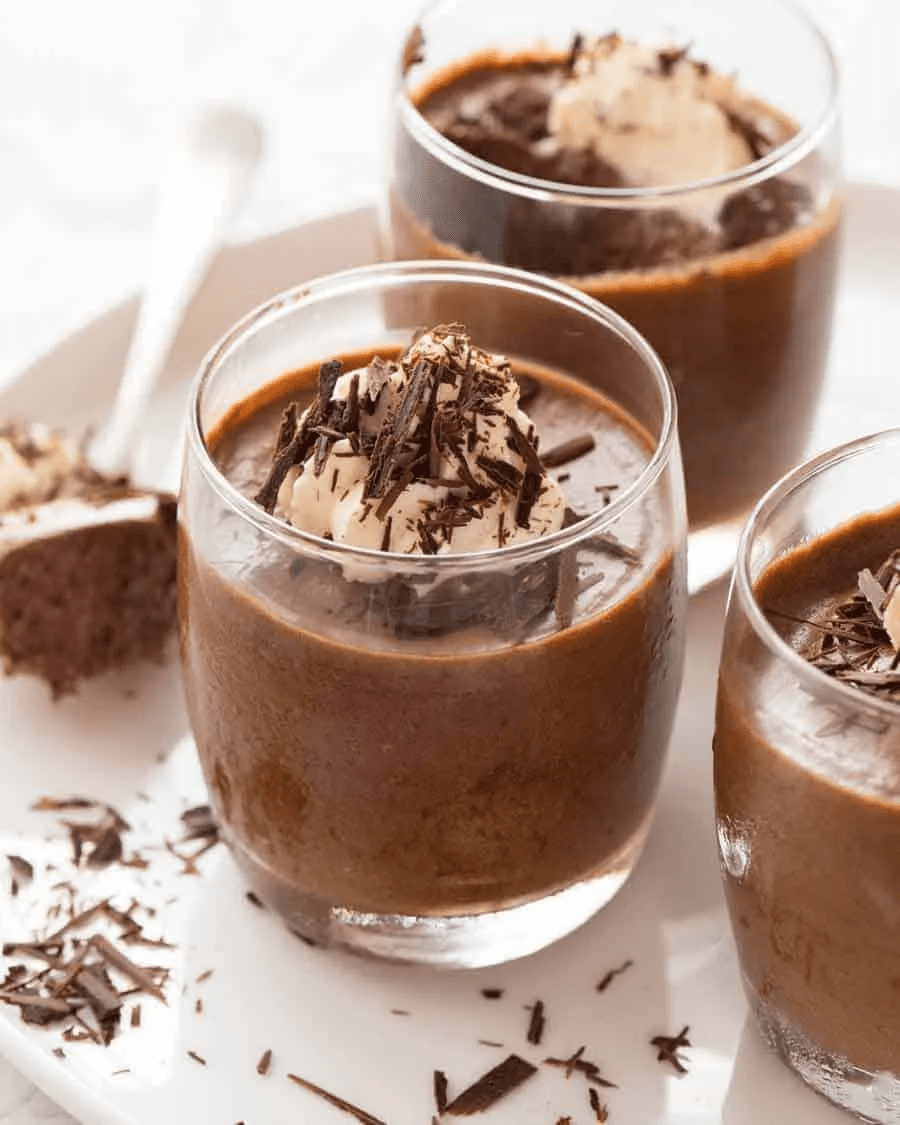
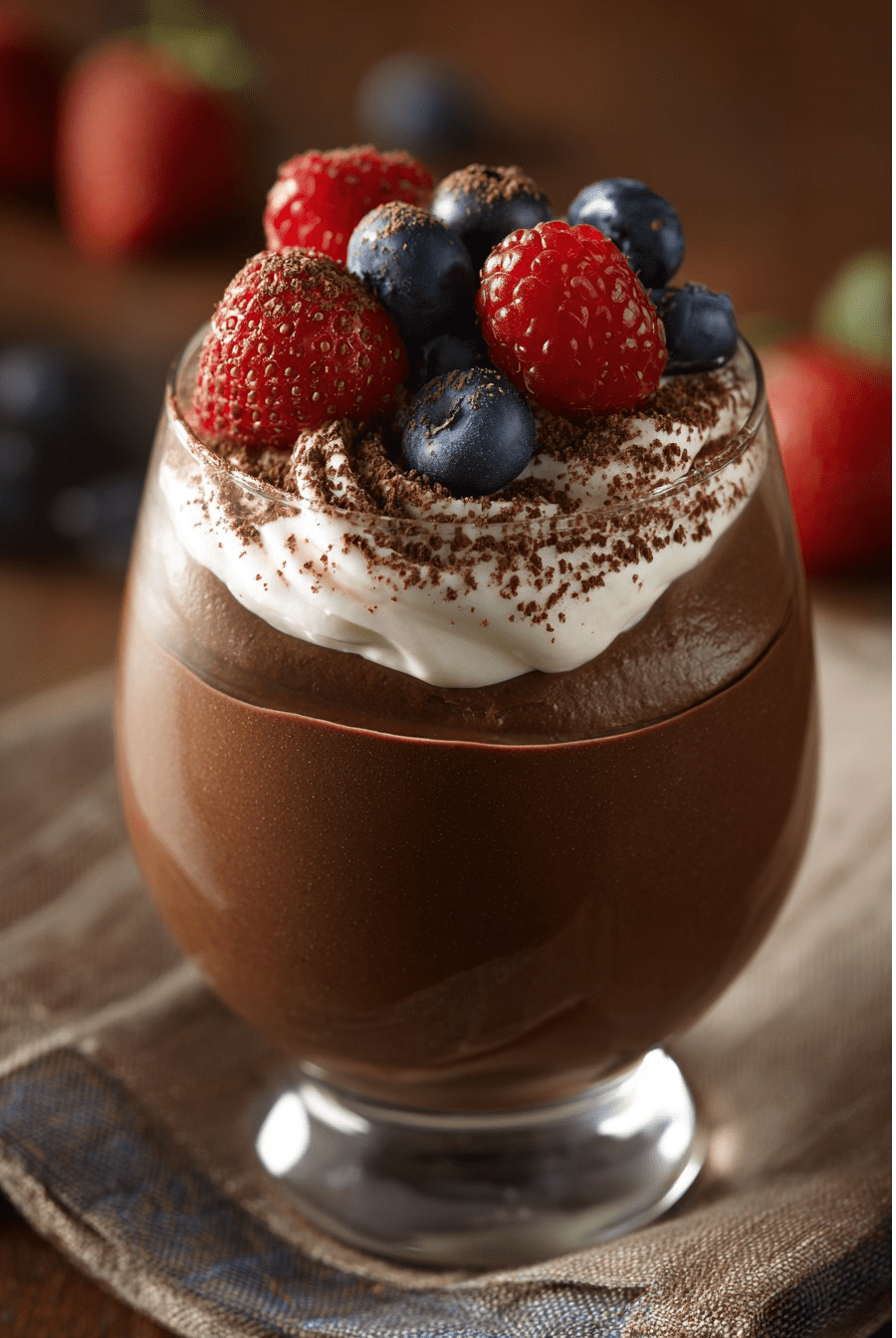
Four ingredients, the right technique and an overnight rest. Dark chocolate loosened by egg yolks, lifted by whipped egg whites, deepened by a splash of cognac. The classic French version — no cream — because mousse means foam, and the foam comes from the eggs.
The word mousse is French for foam. This is not a decorative etymological detail but the recipe’s whole argument. A mousse is a foam: something made light and airy by the incorporation of gas into a substance that would otherwise be dense. The gas, in a chocolate mousse, comes from egg whites whisked to stiff peaks and folded carefully into melted chocolate. The foam is the point. The foam is, in a meaningful sense, what you are making.
The version most people make in England — dark chocolate melted into whipped double cream, set in the fridge — is a chocolate cream. A very good chocolate cream, rich and dark and entirely worth eating, but not a mousse in the technical sense, because cream whipped to soft peaks is not the same foam as egg whites whisked to stiff ones. The cream-based version is heavier, richer, less intensely chocolatey, and considerably less interesting in texture: it does not have the particular yielding lightness that makes a proper mousse au chocolat one of the best endings a dinner can have.
This is the French version. It has been made in French home kitchens for generations and it requires four ingredients, a clean bowl, and the patience to fold rather than stir.
What Makes It Work
The structure of a classic mousse au chocolat is elegant once you see it. The melted chocolate, combined with egg yolks and a small amount of butter, forms a rich, dark, intensely flavoured base — essentially a ganache, loose enough to take the egg whites but thick enough to hold them. The egg whites, whisked to stiff peaks with a pinch of sugar, are the aeration: they bring to the chocolate a lightness that the chocolate alone could never achieve, without diluting or softening what it tastes like. The result is a mousse that is simultaneously more intensely chocolate-flavoured than the cream version and lighter in texture — a combination that seems paradoxical and is entirely real.
The cognac or dark rum is the fourth ingredient and the one most likely to be omitted by people who are not sure it is necessary. It is necessary, though not in a way that makes the mousse taste of alcohol. A small amount of a warm, barrel-aged spirit does to chocolate what salt does to everything: it deepens and amplifies what is already there without announcing itself. The mousse with cognac in it tastes more completely of chocolate than the same mousse without it, and the reason is the same reason a pinch of sea salt in a brownie tastes more of chocolate than one without. The cognac is not a flavouring; it is a seasoning.
The Temperature Of The Chocolate
The single step most likely to produce scrambled eggs in this recipe is adding the yolks to chocolate that is too hot. Chocolate melts at a relatively low temperature, and once melted it retains heat for several minutes after leaving the bain-marie. Egg yolks begin to cook at around 65°C — not a very high temperature — and if the chocolate is still significantly above that when the yolks arrive, the result is a mousse with small cooked egg particles throughout it, which is not what anyone wanted.
The cooling period of five minutes after the chocolate leaves the heat is not optional and is not approximate. The chocolate should be cool enough to hold a finger against the bowl without discomfort, warm enough to still be fluid. This is the correct temperature. At this point the yolks can be added safely, the mixture will thicken immediately as it always does when egg meets warm chocolate, and everything will be exactly as it should be.
The Bowl
The bowl in which the egg whites are whisked must be completely clean, dry and free of any fat whatsoever — including, critically, any trace of egg yolk. Fat prevents egg whites from whipping: a single drop of yolk in the whites, a smear of butter from inadequate washing, even a damp bowl can mean whites that froth but never stiffen, no matter how long you whisk. The bowl should be rinsed with a little lemon juice or white wine vinegar and dried thoroughly before the whites go in. This takes thirty seconds and is the single most important preparation step in the recipe.
The Folding
Folding egg whites into a heavier mixture is the technique the whole recipe depends on, and the instruction “fold gently” covers only half of what needs to happen.
The first addition of egg white into the chocolate base should not be gentle at all. Take one large, generous spoonful of the stiff whites and stir it into the chocolate with a vigorous, completely unsentimentall motion. The purpose is to loosen the chocolate base — to bring it closer in consistency to the whites so that the subsequent folding can actually work. Attempting to fold stiff whites directly into an unloosened chocolate base simply pushes the whites around on the surface rather than incorporating them. Loosen first, then fold.
The folding itself is a specific motion: a large spatula or metal spoon cuts down through the centre of the bowl, sweeps along the bottom, and lifts up and over the top, turning the mixture over on itself. The bowl is rotated slightly between each fold. The motion is continuous and unhurried. The goal is to combine the whites with the chocolate without deflating the air that the three minutes of whisking put into them. A few visible streaks of white in the finished mixture are not a problem; they will set invisibly in the fridge. Overworking to eliminate them is the problem, because overworking deflates, and a deflated mousse au chocolat is simply a cold chocolate ganache in a glass.
The Overnight Rest
A chocolate mousse benefits from an overnight rest more than almost any other dessert in this collection. The mousse made and served the same evening is good. The mousse made the evening before and served the following night is better in every measurable respect: the texture is more set and more yielding simultaneously, the flavour is deeper, the cognac has integrated fully into the chocolate rather than sitting slightly separate from it. Make it the night before. It is one of the most accommodating desserts in the repertoire, which is why it appears at so many French dinner parties and so few last-minute ones.
The Recipe
Serves 6. About 20 minutes’ active work. Make the day before.
Ingredients
- 200g dark chocolate (70%), finely chopped
- 30g unsalted butter, cubed
- 4 large eggs, separated, at room temperature
- 2 tbsp caster sugar
- 2 tbsp cognac or dark rum
- A pinch of fine sea salt
- A pinch of cream of tartar
The Method
- Melt the chocolate and cool it. Melt the chocolate and butter together in a heatproof bowl set over a pan of barely simmering water, making sure the base does not touch the water. Stir gently until completely smooth. Add the cognac and stir through. Remove from the heat and leave to cool for 5 minutes until the chocolate is no longer warm to the touch but still fluid.
- Beat the yolks into the chocolate. Whisk the egg yolks and 1 tablespoon of the caster sugar until pale and slightly thickened. Pour the cooled chocolate over the yolks in a steady stream, whisking constantly. Stir in the salt. The mixture will thicken immediately.
- Whisk the whites to stiff peaks. In a large, scrupulously clean bowl, whisk the egg whites with the cream of tartar on medium speed until foamy. Add the remaining tablespoon of sugar and whisk on high speed until the whites hold stiff, glossy peaks that stand upright when the whisk is lifted.
- Fold in three stages. Take one large spoonful of the whites and stir it vigorously into the chocolate to loosen it. Add half the remaining whites and fold in gently with a large metal spoon or spatula, cutting down through the centre and lifting up and over. Repeat with the final addition. Fold until just combined — a few streaks of white are fine.
- Divide and refrigerate. Divide between six small glasses or ramekins. Do not smooth the tops. Cover loosely and refrigerate for at least 4 hours, or overnight.
- Serve. Remove from the fridge 10 minutes before serving. Needs nothing alongside it.
A Few Notes Worth Knowing
On the chocolate: 70% is the minimum for a mousse with genuine depth and intensity. Below 65% and the mousse risks being sweet rather than chocolatey, which rather defeats the purpose. Single-origin chocolate from a good producer will give a noticeably more complex result than supermarket cooking chocolate; this is one of the recipes where quality of ingredient makes the most direct and immediate difference.
On the egg whites: at room temperature, not cold. Cold whites take longer to whip and produce a slightly less stable foam. If you forgot to take them out, a few minutes in a bowl of warm water will help.
On the cognac: a VS or VSOP is entirely appropriate — there is no need to open anything aged. Dark rum (not spiced) is an equally good alternative and gives a slightly different, slightly sweeter depth. Both work; choose whichever is already open.
On the cream of tartar: a small amount of cream of tartar stabilises the egg white foam and helps it hold its structure through the folding and the setting. A squeeze of lemon juice works in its place. Both are optional but both are worth using.
On serving: the mousse needs nothing alongside it and is made worse by additions. It is complete. If the occasion absolutely demands something to hold, a very thin, plain, unflavoured biscuit — a tuile, a langue de chat — is the only thing that does not compete. Cream on the side softens the intensity that makes the mousse what it is. Leave it off.
On raw eggs: this recipe contains raw egg whites and lightly warmed yolks and is not suitable for pregnant women, very young children, the elderly or anyone with a compromised immune system. The rest of the table should eat it with enthusiasm.
This is a recipe built from the classical French tradition of mousse au chocolat.
Recipe Card
Recipe Name: A Proper Chocolate Mousse
Recipe Description : A classic French mousse made with dark chocolate, eggs and cognac, folded carefully for an airy texture and rested overnight for a deeper, more intense flavour.
Serves: Serves 6
Preparation Time: Approximately 20 minutes active preparation
Chilling & Resting Time: At least 4 hours chilling, preferably overnight, plus 10 minutes at room temperature before serving
Cooking Time: Approximately 5–10 minutes to melt the chocolate and prepare the warm chocolate base
Total Time: Approximately 4 hours 40 minutes minimum; ideally prepared the day before
Difficulty: Moderate



Get our latest Delivered
Beautiful recipes, inspiration, guides and news that makes you want to live!