Pea and Mint Risotto
Pea & Mint Risotto
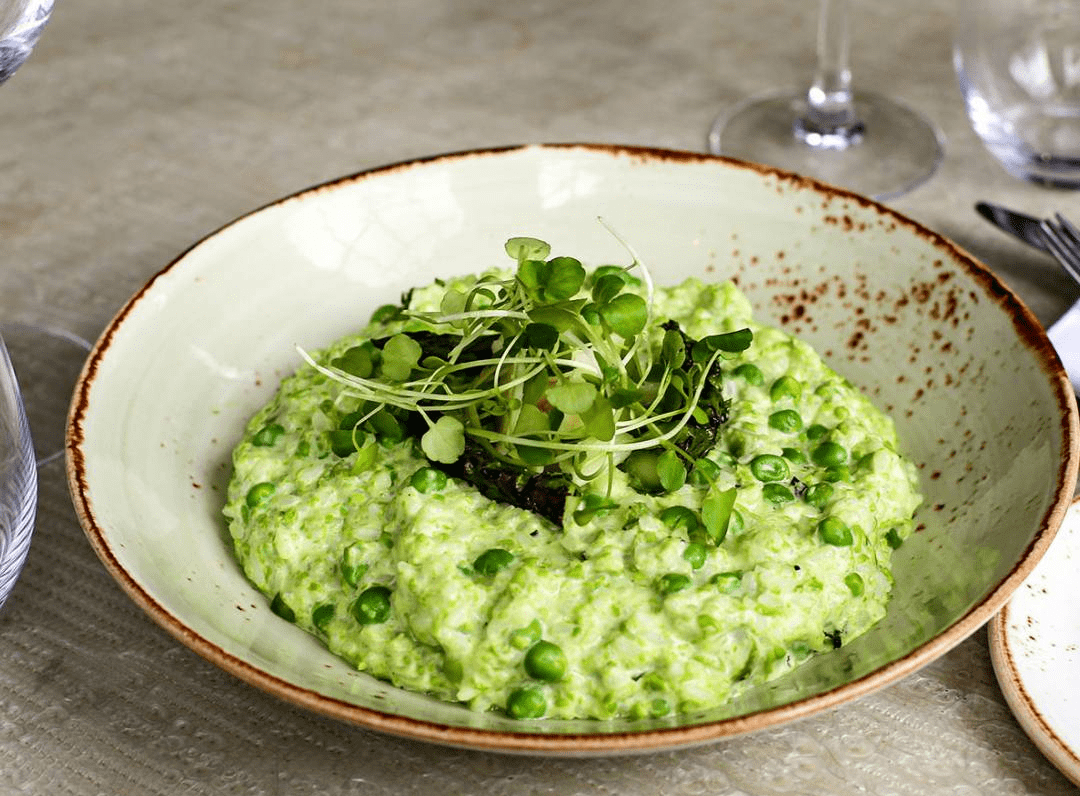
The spring answer to the Risotto alla Milanese: the same five stages, the same unhurried attention, but bright green and fresh where the Milanese is golden and deep. Where one belongs to winter and saffron and the grandeur of a Lombard city, this one belongs to May, and to a bowlful of the most vivid colour a risotto pan can produce.
If you have already made the Risotto alla Milanese elsewhere in this collection, you know the technique for this one. The five stages — soffritto, tostatura, sfumatura, brodo, mantecatura — are identical, and what changes is everything that those stages are in service of. The Milanese is saffron and Parmesan and the particular richness of a dish that has been making the case for itself since 1574. This one is peas and spring and a brightness that comes partly from the vegetables and partly from the mint stirred in off the heat at the very last moment, where it stays vivid and alive rather than wilting into something dull and grey.
The two risottos make natural companions on this shelf: winter and spring, gold and green, occasion and weeknight. The technique is a constant. What you put through it is the season.
The Pea Question
The first decision in a pea and mint risotto is how to use the peas, and the answer that produces the best version is not the most obvious one. A risotto made with whole peas throughout is pleasant enough but pale — the green never quite integrating with the white of the rice, the pea flavour dispersed rather than concentrated. The version that produces the vivid, deeply satisfying green that makes this risotto worth making is built on a split approach: half the peas blended into a smooth purée and stirred through the risotto in the final three minutes of cooking, and the other half left whole and added with the last ladle of stock.
The purée does two things simultaneously. It flavours the cooking liquid — every subsequent stir of the risotto draws the pea into the rice rather than leaving it on the surface — and it turns the whole pan the particular deep, saturated green that makes this dish look as good as it tastes. The whole peas, added separately near the end, provide the texture and the freshness that the purée cannot: the occasional gentle resistance of a pea that has been warmed through but not overcooked, its skin still intact, its sweetness still concentrated.
The mint goes into the purée, where it contributes flavour and depth to the base, and then again into the finished risotto just before serving, where it stays vivid and fragrant because it has never encountered heat. Mint cooked in a risotto turns grey and bitter within minutes. Mint torn and stirred through a bowl at the last moment stays bright green and smells of the herb rather than its ghost. Both stages matter and they are doing different things.
The Peas Themselves
A good pea and mint risotto requires good peas, and the best peas for this recipe are not necessarily the fresh ones you might expect.
Fresh peas in the pod — specifically peas bought from a market stall or a farm shop in May or June, shelled and used the same day — are exceptional, sweet and grassy and tasting entirely of the season. They are worth the effort of shelling on the days when they are available and perfect, and the season for this is genuinely short, which is part of what makes it worth chasing.
Supermarket fresh peas are a different matter. By the time they reach the shelf, the journey from field to pod to chilled transport to display has begun converting the sugars back to starch, and the result is a pea that tastes flat and slightly mealy compared to the frozen alternative. Frozen peas — particularly the small, sweet petits pois varieties — are frozen within hours of picking, at the point of maximum sweetness, and they are very often a better ingredient than fresh peas purchased without knowledge of their provenance.
This is one of those cases where the honest answer to “fresh or frozen” is “it depends,” and the dependence is on where and when the fresh peas come from. For this recipe, small frozen petits pois from a good brand will produce a beautiful risotto on any day of the year. Fresh peas from a May market will produce something exceptional, and briefly.
The Stock
Vegetable stock rather than chicken gives this risotto the lightness and clarity its character asks for. The Milanese uses chicken or veal stock to support its saffron richness and its depth. Here, a good vegetable stock — properly made from onion, celery, leek, carrot and herbs, or a good quality commercial one — lets the pea and the mint carry the bowl rather than the stock doing too much of the work itself. The purity of the flavour depends on the stock staying in the background.
Whatever stock you use, it must be warm throughout the cooking — cold stock halts the starch release and produces an uneven result, as discussed in the Milanese piece. Keep it at a gentle simmer in a separate pan beside the risotto, ladle it in warm, and do not let the risotto cool between additions.
Why This Risotto Is Worth Making
The technical argument for this dish is the split pea method and the all’onda finish. The seasonal argument is that it is exactly what a bowl of food should be in the last week of April or the first week of May: something that looks like spring arrived, smells of mint and freshness, and feels like a meal rather than a concession to the season having not quite turned yet.
It is also genuinely fast, as risottos go. The pea purée takes four minutes. The soffritto is patient but brief. The rice cooks in about eighteen minutes of attentive stirring, and the whole exercise from cold to table is achievable in thirty to thirty-five minutes, which makes this the weeknight risotto in this collection and the Milanese the weekend one.
It is a meatless dish that does not feel like an absence. It is a vegetarian risotto that does not taste like one is missing something from the bowl. The peas and the Parmesan and the butter in the mantecatura produce together a richness and a depth that stands entirely on its own terms, and the mint lifts the whole thing into something that is distinctly itself rather than a version of anything else.
The Recipe
Serves 4. About 10 minutes’ preparation and 25 minutes’ attentive cooking.
Ingredients
- 400g frozen or fresh peas, the smaller the better
- 1 small bunch fresh mint, leaves picked
- 300g Carnaroli rice (or Arborio)
- 1 white onion or 2 shallots, very finely diced
- 60g unsalted butter: 30g for the soffritto, 30g cold and cubed for the mantecatura
- A splash of dry white wine or dry vermouth
- 1.2 litres good vegetable stock, kept warm in a separate pan throughout
- 80g Parmigiano Reggiano, finely grated, plus more to serve
- Sea salt and white pepper
The Method
- Make the pea purée. Take 200g of the peas and blanch in boiling water for 60 seconds, then drain. Blend with about half the mint leaves and two ladlefuls of the warm stock until completely smooth and very green. Pass through a fine sieve for a silky result; leave it as is if you prefer a little texture. Set aside. The remaining 200g of peas stay whole.
- The soffritto. Melt 30g of the butter in a wide, heavy-based pan over medium-low heat. Add the onion with a pinch of salt and cook very gently for 8 to 10 minutes until completely soft, sweet and translucent. Not golden, not coloured. Patient.
- Toast the rice. Turn the heat to medium-high. Add the rice and stir continuously for 2 minutes until the grains are coated in butter and lightly translucent at the edges.
- The sfumatura. Pour in the wine or vermouth and stir until completely absorbed, about 1 minute.
- Add the stock, ladle by ladle. Begin adding the warm stock one ladleful at a time, stirring frequently and waiting until each addition is almost fully absorbed before adding the next. Keep the heat at a steady simmer. After about 14 minutes, taste the rice — it should be approaching al dente.
- Add the purée and the whole peas. With about 3 minutes of cooking remaining, stir the pea purée through the risotto. It will turn the whole pan a vivid, deeply satisfying green. Add the remaining 200g of whole peas with the next ladle of stock and continue cooking until the rice is al dente and the whole peas are just tender but still bright.
- The mantecatura, and the mint. Take the pan completely off the heat. Add the cold, cubed butter and the Parmigiano Reggiano and stir vigorously for 60 to 90 seconds until glossy and creamy. Cover and rest for exactly 2 minutes. Tear the remaining mint leaves and stir through just before serving — off the heat, the mint stays vivid and fragrant. Season carefully and divide between warm bowls with more Parmigiano on the table.
A Few Notes Worth Knowing
On the mint timing: this is the most important instruction in the recipe and the easiest to overlook. Mint added to a hot risotto turns grey and bitter within two minutes. Mint torn and stirred through a rested, off-heat risotto just before it reaches the table stays bright green, fragrant and alive. The two-stage approach — some into the purée for flavour depth, the rest in at the very end for freshness — is what makes this risotto taste as good as it looks.
On the texture of the purée: passing it through a fine sieve takes an extra three minutes and produces a silkier, more refined result with a cleaner colour. Leaving it unsieved gives a slightly more rustic texture and a more intense pea flavour. Both are good. The sieved version is better for a dinner party; the unsieved one is better for a Tuesday.
On what to serve alongside: nothing, or very close to nothing. A green salad sharpened with mustard vinaigrette, served after rather than alongside. More Parmigiano than seems polite. A glass of something light and dry — a Soave, a Verdicchio, or one of the Kent whites from the Finer Edit’s own wine country, which are increasingly worth seeking out for exactly this kind of dish.
On the Milanese: if this is the first risotto you have made from this collection, everything in the Five Stages section of the Risotto alla Milanese applies here. The technique is identical and the explanation there is fuller. If you have already made the Milanese, you know everything you need to know. The only new step is the purée, and the purée is four minutes’ work and a blender.
This is recipe is built from the Italian tradition of risotto “di piselli” and informed by the techniques in the Risotto alla Milanese elsewhere in this collection.
Recipe Card
Recipe Name: Pea and Mint Risotto
Recipe Description : A vivid spring risotto made with silky pea purée, whole peas, fresh mint, Parmigiano Reggiano and butter, finished off the heat until creamy and flowing all’onda.
Serves: Serves 4
Preparation Time: Approximately 10 minutes
Chilling & Resting Time: 2 minutes resting after the mantecatura; no chilling required
Cooking Time: Approximately 25 minutes
Total Time: Approximately 35 minutes
Difficulty: Moderate



Get our latest Delivered
Beautiful recipes, inspiration, guides and news that makes you want to live!