A Proper Lemon Tart
A Proper Lemon Tart
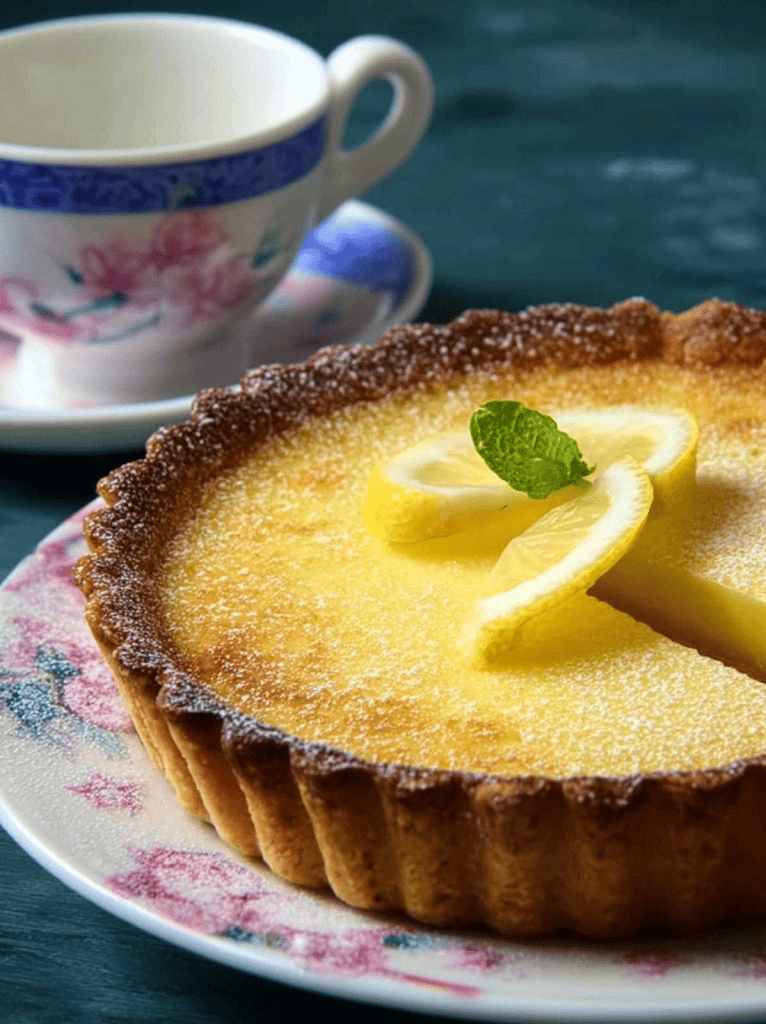
Pâte sablée, a sharp lemon curd enriched with a little cream, and a thin caramelised crust on top that cracks under the spoon. Three distinct textures, one tart, and the one I make when the occasion needs something worth the effort.
I have been making this tart long enough to have made most of the mistakes it is possible to make with it. Pastry that shrank into itself during blind baking. Filling that went grainy because I let it boil. A curd that didn’t set and wept sadly into the shell on the way to the table. A brûléed top done too far in advance that softened into a sad, sticky sheet before the first slice was cut. Each failure added something to the version I make now, which is the version I make when the occasion calls for something genuinely worth the afternoon it asks of you.
A proper lemon tart is not a quick dessert, and it does not pretend to be. It has three distinct components — a buttery, crumbling pastry, a sharp and richly set curd, and a brûléed sugar crust that cracks like glass under the spoon — and each one has to be right, independently and in relation to the others. The pastry must be sandy without being crumbly, set without being tough, blind baked to a true golden biscuit before a drop of liquid filling ever touches it. The filling must be sharp enough to make you catch your breath slightly, smooth enough to slice cleanly, and set enough to hold its shape without becoming rubbery. And the brûlée must be thin, even and executed immediately before serving, because caramel is not a patient thing.
When it is all right, the tart is one of the finest things I know how to make. The combination of the cold, sharp curd against the hot, bitter caramel, with the crumbling pastry beneath them, is as close to a perfect set of contrasts as I have encountered in a dessert. It does not need cream alongside it. It does not need anything alongside it. It is complete.
The Pastry, and Why Pâte Sablée
Pâte sablée is the sandy one. The name means sand, and it refers to the particular crumbling, melting texture that a very high proportion of butter to flour produces when worked correctly: not the flaky lamination of rough puff, not the springy resilience of shortcrust, but something genuinely sandy, breaking into almost powdery crumbs as you press a fork through it. It is the most fragile of the French pastry doughs and the most difficult to handle, but it is also the most rewarding: under a lemon tart, that crumbling texture is exactly right, a sandy counterpoint to the smooth curd above it.
The ground almonds are not strictly classic but have become non-negotiable in my version over many batches. They add a faint nuttiness that complements the lemon and the brown edges of the blind-baked shell, and they make the pastry slightly more forgiving to roll and handle — the fat from the almonds giving it a little extra lubricity that pure flour-and-butter doesn’t provide. Leave them out if you prefer; the tart still works. But I always put them in.
The cold butter, the minimal working and the two chilling periods are all load-bearing elements of the method. Pâte sablée developed by a warm hand becomes sticky and unmanageable. Pâte sablée rolled without chilling first shrinks dramatically in the oven, pulling away from the tin sides and creating the kind of pastry wall you cannot fill properly. The two chilling periods — one after making the dough, one after lining the tin — seem like deliberate inconveniences until you have made the tart without them and understood what they are preventing.
The Fully Baked Shell
The most important instruction in this recipe is a negative one: do not put the filling into an underbaked pastry shell.
A lemon tart filling is liquid when it goes in and remains fairly liquid while it bakes. Liquid introduced to a partially baked pastry case soaks into the uncooked dough and produces a base that is wet, soft and incapable of supporting the structure above it. The pastry shell must be completely, thoroughly, properly baked before the filling arrives — not set and pale, which is what most recipes call “blind baked,” but genuinely golden, dry and biscuit-like throughout.
This means blind baking with beans for twenty minutes, then removing the beans and baking for a further ten to fifteen minutes uncovered until the base and sides are both golden. If you press the base gently it should feel firm and dry rather than soft and yielding. If the edges are browning before the base has caught up, cover them loosely with foil for the final ten minutes. The shell should look, before the filling goes in, like something you might eat on its own — which, at this point, you absolutely could, and I confess to eating the trimmings while the filling is cooling.
Cracks in the blind-baked shell are the other thing to manage. Pâte sablée is fragile, and the removal of the baking beans sometimes catches a section of pastry and pulls it. The fix is simple: a small amount of the raw pastry scraps (save them for this purpose) kneaded to a paste with a few drops of cold water, pressed into the crack, and returned to the oven for five minutes to set. Sealed correctly, the crack will not leak filling. Ignored, it will produce a puddle on the oven floor and a tart with a damp bottom.
The Filling, and the Cream
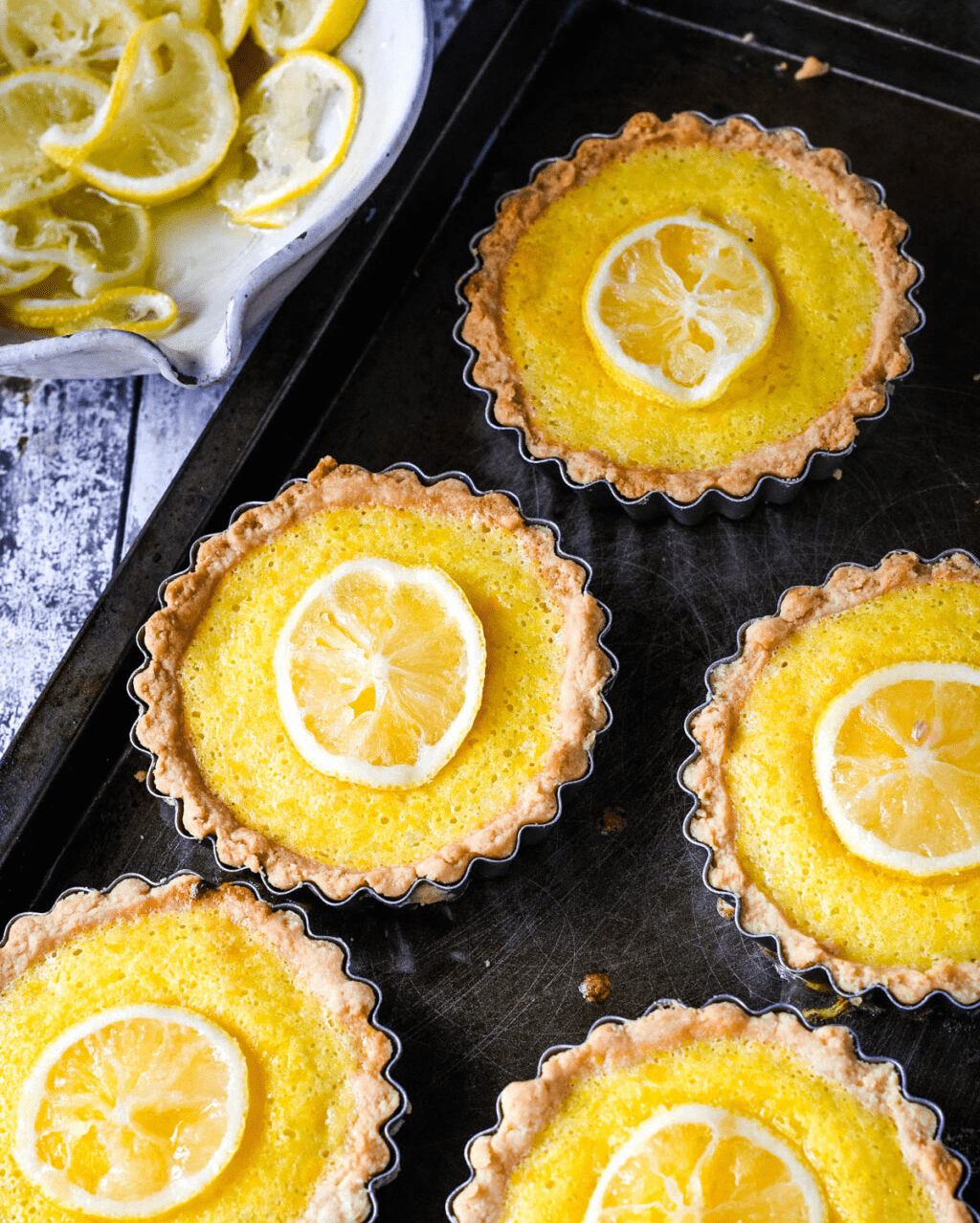
A tarte au citron in the strictest French tradition is eggs, lemon juice, sugar and sometimes butter, nothing else. It produces a tart of genuine sharpness and clear lemon flavour, and I have made many of them. The version I return to adds a little double cream, and the difference is worth understanding rather than simply accepting.
The cream does two things. It adds richness, rounding the sharp acidity of the lemon juice into something more complete and less austere. And it produces a smoother, more stable set: the fat in the cream slows the coagulation of the egg proteins, giving the filling a more even, velvety texture than eggs and lemon juice alone. The result slices more cleanly and holds its shape more reliably on the plate, which matters rather a lot when the alternative is a filling that sags into a puddle the moment you cut it.
The filling is pre-cooked before it goes into the shell, which is a step not all lemon tart recipes include and which I consider essential. Cooking it in a pan over gentle heat until it reaches approximately 82°C — thick enough to coat a spoon, but not boiled — means that when it goes into the shell it has already done most of its setting work and the time in the oven is a gentle completion rather than the primary cooking process. This produces a more stable, more even set and removes the anxiety of whether the filling will firm properly from the oven step entirely.
The filling must be strained before it goes into the shell, which removes the zest solids and any threads of cooked egg white that might have formed during the cooking. What goes into the pastry should be absolutely smooth: a glossy, pale yellow liquid that smells intensely of lemon and catches the light.
The Balance
A proper lemon tart should make you catch your breath slightly. Not wince — the sugar is there to temper the acid — but the lemon should be assertive enough that there is no mistaking what you are eating. The ratio in this recipe — 180ml of juice to 180g of sugar — is on the sharp side of the spectrum, which is where I want it to be. If you prefer something gentler, add 20g more sugar, or use slightly less juice, and the character shifts accordingly.
The balance is also achieved by the temperature at which the tart is served. Ice-cold from the fridge, the filling is firm and the flavours muted. Slightly above fridge temperature — removed from the cold thirty minutes before serving — the curd is softer, the lemon more fragrant, the balance better. The brûlée warms the top surface as it caramelises, and the combination of warm caramel on cold curd is one of the specific pleasures of this version.
The Brûlée
The caramelised top is the detail that elevates this from a very good lemon tart to an exceptional one, and the technique is identical to the crème brûlée elsewhere in this collection: a thin, even layer of sugar, a blowtorch, movement in small circles, stop at deep amber.
The sugar layer must be thin — a single tsp per slice, distributed evenly. Too much and the caramel sets as a thick slab that requires considerable force to break and splinters into shards rather than crackling into the elegant sheet it should be. Too little and there is no crust to speak of. The single even layer that catches the torch and turns amber within sixty seconds is what you are aiming for.
The tart must be completely cold and chilled before the sugar goes on. A warm or room-temperature filling will begin to liquify under the heat of the torch, disturbing the surface and preventing the caramel from setting properly. Properly chilled, the filling is firm enough to take the heat from above without moving.
And then it must be served immediately. The caramel begins to absorb moisture from the curd within minutes, softening from a brittle sheet into something tacky and then soft. This is not a step that can be done in advance of guests arriving. It is a step done at the table, or at the counter thirty seconds before carrying the tart in. The sound of the first spoon cracking through it — that particular high, glassy note — is the whole point, and it is worth waiting for.

The Recipe
Serves 10. About 40 minutes’ active work across three sessions. Make the pastry and filling the day before; brûlée immediately before serving.
Ingredients
For the pâte sablée
- 200g plain flour
- 100g unsalted butter, cold and cubed
- 80g icing sugar, sifted
- 30g ground almonds
- 2 egg yolks
- A pinch of fine sea salt
- 1 to 2 tsp ice-cold water, if needed
For the lemon filling
- 4 whole eggs, at room temperature
- 2 egg yolks, at room temperature
- 180g caster sugar
- Zest of 3 unwaxed lemons
- 180ml fresh lemon juice (about 4 to 5 lemons)
- 100g unsalted butter, cold and cubed
- 100ml double cream
For the brûlée
- 5 tbsp caster or white granulated sugar
Method
- Make the pâte sablée. Pulse the flour, butter, icing sugar, ground almonds and salt in a food processor until the mixture resembles fine breadcrumbs. Add the egg yolks and pulse until the dough just begins to come together, adding a teaspoon of ice-cold water if needed. Turn out, press gently into a flat disc without kneading, wrap and refrigerate for at least 1 hour.
- Line the tin and chill again. Roll the chilled pastry on a lightly floured surface to a circle about 3mm thick and slightly larger than a 23cm fluted tart tin with a removable base. Lift over a rolling pin and lay into the tin, pressing gently into the fluted sides. Trim, leaving a small overhang. Prick the base all over. Refrigerate for another 30 minutes.
- Blind bake fully. Heat the oven to 180°C (160°C fan). Line the pastry case with baking paper, fill with baking beans and blind bake for 20 minutes. Remove the paper and beans and bake for a further 10 to 15 minutes until the pastry is fully golden and dry. It should look like a biscuit. Trim the overhanging pastry with a sharp knife while still warm. Seal any cracks with a paste of raw pastry and cold water; return to the oven for 5 minutes.
- Make the lemon filling. Reduce the oven to 140°C (120°C fan). In a heavy saucepan, whisk together the eggs, yolks, sugar, lemon zest and juice until combined. Add the cold butter and cream. Cook over medium-low heat, stirring constantly with a silicone spatula, until the mixture thickens to coat the back of a spoon and reaches approximately 82°C, about 8 to 10 minutes. Do not let it boil. Pass through a fine sieve into a jug. Leave to stand for 2 minutes then skim off any surface bubbles.
- Fill and bake. Set the pastry case on a baking tray. Pour the warm lemon filling into it to just below the rim. Bake for 25 to 30 minutes until set at the edges with a distinct wobble in the centre. Cool completely at room temperature, then refrigerate for at least 4 hours or overnight.
- The brûlée. Remove the tart from the tin and place on a serving plate. Sprinkle the sugar evenly over the surface in a thin, uniform layer. Using a blowtorch in small circular movements, caramelise to a deep, even amber. Leave for 1 minute to set, then serve immediately.
A Few Notes Worth Knowing
On the pastry: pâte sablée is more fragile than shortcrust and more forgiving in flavour. Handle it as little and as coldly as possible. If it tears while lining the tin, press it back together with damp fingertips — the texture will be unaffected. The food processor method is more reliable than rubbing in by hand for this dough, though both work.
On the filling temperature: 82°C is the point at which egg proteins begin to set properly without scrambling. If you do not own a thermometer, the coating-a-spoon test is reliable: run a finger across the back of a spoon dipped in the mixture, and if the line holds clean, the filling is ready. If the line fills in, cook a little longer.
On the acidity: I like this tart sharp. If you need it gentler — for a broader table, or for children — add 20 to 30g more sugar to the filling. The character shifts noticeably and the tart becomes more approachable, if slightly less interesting.
On what comes alongside it: nothing is required and nothing is missed. If the occasion demands an accompaniment, a small spoonful of crème fraîche alongside each slice — cool, slightly sour, entirely plain — is the one addition that adds rather than detracts. Cream is too rich. Ice cream competes. Crème fraîche simply listens.
On making ahead: the tart keeps well in the fridge for up to three days before brûléeing, which makes it one of the better advance desserts in this collection. The pastry softens slightly over time but remains thoroughly pleasant. Brûlée only on the day and only immediately before serving.
This is my own recipe, refined over many batches and several instructive failures. We won’t mention those.
Recipe Card
Recipe Name: Lemon Tart
Recipe Description : A sharp and elegant French-style lemon tart with buttery pâte sablée, a smooth cream-enriched lemon filling and a thin brûléed sugar crust that cracks beneath the spoon.
Serves: 10 Slices
Preparation Time: Approximately 40 minutes active preparation
Chilling & Resting Time: At least 5½ hours, plus cooling
Cooking Time: 55–65 minutes across the pastry and filling stages
Total Time: Approximately 7 hours including chilling and cooling; ideally prepared over two days
Difficulty: Considered



Get our latest Delivered
Beautiful recipes, inspiration, guides and news that makes you want to live!